



Key Takeaways:
- Negative Ions are oxygen molecules carrying an extra electron, and that small difference is what makes them biologically interesting.
- Research has linked Negative Ion exposure to potential health benefits, such as improvements in mood, stress response, and general well-being, though many findings are preliminary and more study is needed.
- Modern indoor environments are significantly depleted of Negative Ions compared to nature. The BioMat® uses heated crystal technology to restore that balance continuously, and without electromagnetic fields.
You already know what Negative Ion-rich air feels like, even if you've never put a name to it. It's the clarity after a thunderstorm. The deep breath you take standing near a waterfall. The ease that comes with being in a forest for an hour.
That feeling has a physical explanation, and Negative Ions are a big part of it. In simple terms, Negative Ions are oxygen molecules that have gained an extra electron, giving them a mild electrical charge that makes them biologically active. Once in the body's environment, they interact with your bioelectrical systems in ways researchers are still working to fully understand, but the direction of what's been found so far is worth paying attention to.
At BioMat, Negative Ion generation is one of the three core technologies built into every mat we make. And, in this article, we look into Negative Ions' health benefits, their biological mechanisms, and why consistent exposure may help transform wellness.
What Nature Already Knows About Negative Ions
One of the most intuitive ways to understand Negative Ions’ health benefits is to look at where they show up most in nature. Researchers at Queensland University in Australia discovered that trees, particularly deep-rooted species like eucalyptus, draw radon up through groundwater and release it into the air during transpiration, effectively raising the Negative Ion concentration in wooded environments. The result is the kind of clean, electrically balanced air that most of us instinctively associate with feeling better outdoors. For a closer look at the science behind that process, our dedicated article, trees, radon and Negative Ion, is worth reading.
But the takeaway isn't complicated. Long story short, natural environments rich in Negative Ions tend to feel restorative. The harder question, and the one researchers are increasingly focused on, is how to bring more of that balance indoors, where most of us actually spend our time. The BioMat® is our answer to that question.

The Biological Impact Of Negative Ion Therapy
So what are Negative Ions actually doing inside the body? In simple terms, they are invisible molecules with an extra electron, which are abundant in nature (Jiang et al., 2018).
Understanding Negative Ions for health means looking at what happens inside the body when exposure is consistent. Here's what the research suggests, with the caveat that this is a field still building its evidence base.
Cellular Function
Early research suggests Negative Ions may influence cell membrane permeability, which could support more efficient cellular processes. Some research also points to a potential role in neutralizing free radicals, which are associated with oxidative stress in the body.
Mood And The Brain
Mood regulation is one of the more studied areas of Negative Ion benefits for the body. Some preliminary research has looked into a potential link between high-dose Negative Ion exposure and mood (Perez et al., 2013). Separately, some workplace studies have noted improved focus and productivity in ion-enriched environments, a finding that researchers suggest may be worth investigating further. But is the BioMat® effective for stress? Some research suggests Negative Ion exposure may help reduce stress markers and support recovery from stress-related mental fatigue (Nakane et al., 2002).
Respiratory Comfort And Air Quality
Negative Ions for health have also been studied in the context of air quality. Research suggests that Negative Ions bind to airborne particles, such as pollutants and allergens, effectively pulling them out of the air before they're inhaled. Some research suggests this may benefit people who are sensitive to airborne irritants, though the evidence here is also preliminary.

The Full Picture: What Negative Ions For Health May Address
What makes Negative Ions genuinely interesting from a research perspective is the range of systems they appear to interact with. The evidence is early, but it points to advantages that go beyond any single mechanism. Here's what research suggests may be at play:
- Circulation: Some studies associate Negative Ion exposure with improved blood flow and oxygen delivery.
- Physical Recovery: Cleaner air from Negative Ion generation may support muscle recovery after physical exertion.
- Discomfort Relief: Negative Ions' potential free radical-neutralizing properties have been studied in the context of tension and physical discomfort.
- Breathing Comfort: By binding to airborne particles, Negative Ions may support easier breathing for sensitive individuals.
- Rest: Some research suggests Negative Ion exposure may support cortisol reduction, which could create more favorable conditions for the body to wind down.
None of these are guaranteed outcomes. Rather, they're areas of active research interest, and the pattern across that research is what makes Negative Ion benefits in the body worth taking seriously.
How The BioMat® Delivers Negative Ion Therapy
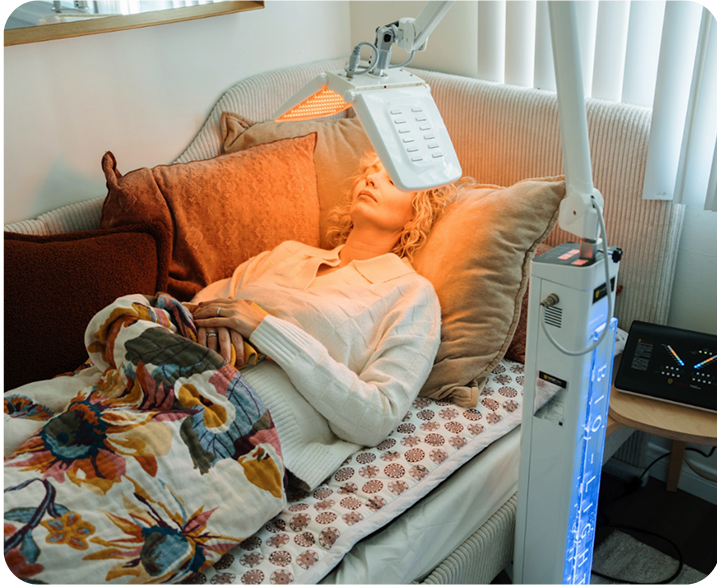
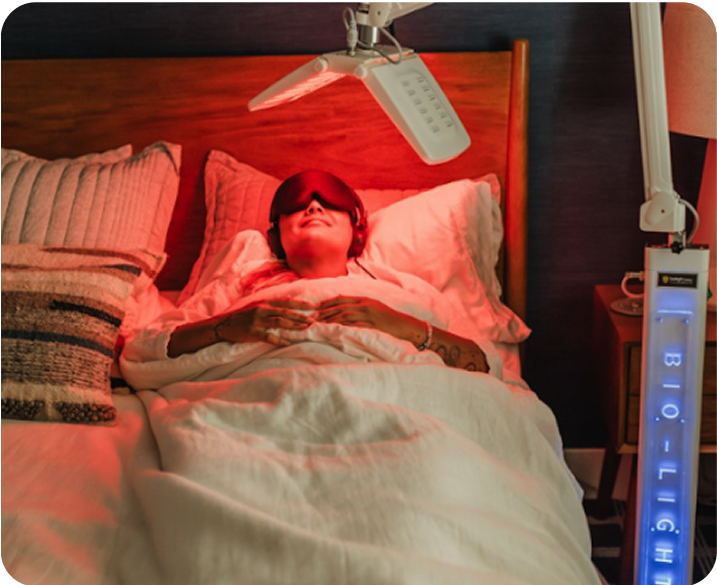
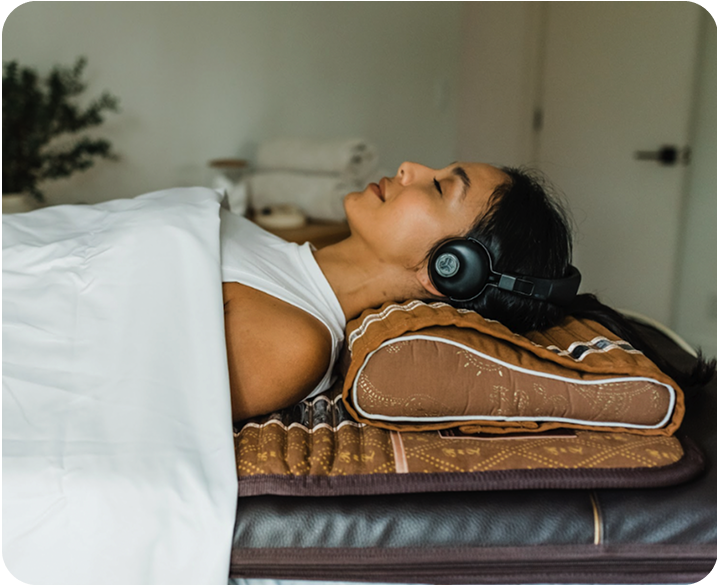
Most consumer-grade ionizers rely on synthetic electrical mechanisms that can produce electromagnetic fields (EMFs) as a byproduct. The BioMat® takes a unique approach, using crystal-based generation using natural Amethyst and black Tourmaline, which produce Negative Ions when heated to therapeutic temperatures. This crystal-based system produces ions continuously throughout a session, rather than in pulses. And because the BioMat® is used with direct body contact, Negative Ions are delivered at the surface rather than dispersed into the room.
The result is approximately 3,236 Negative Ions per cubic centimeter, nearly double the output of comparable Infrared mats, produced through two patented layers: the TOCA Layer (a black Tourmaline fabric layer) and the Peach and Grape Seed Layer, which adds natural infrared output. That combination is part of what distinguishes the BioMat® as an FDA 510(k) Class II Medical Device. No other Infrared mat holds that designation. For a full breakdown of how the technology works, see how the BioMat® heals.

Final Thoughts
Negative Ions aren't a wellness trend. They're a fundamental part of the environments humans have always found restorative, and research is starting to explain why. The challenge has simply been figuring out how to bring therapeutic concentrations indoors, where most of us spend the majority of our days.
That's what the BioMat® was built to do. With 25+ years of research, FDA registration, a 3-year warranty, and results from over 500,000 users worldwide, it's one of the most rigorously developed tools available for simple, soothing Negative Ion therapy that supports healing that compounds over time.
Frequently Asked Questions About Negative Ions Health Benefits
What are Negative Ions, and how do they work?
Negative Ions are oxygen molecules with an extra electron. That electrical charge makes them biologically active, and research suggests they interact with the body's bioelectrical systems in ways that may support mood, stress response, and general well-being.
What are the main Negative Ion health benefits?
Research has linked Negative Ion exposure to potential improvements in mood, stress markers, focus, and physical comfort. Most findings are promising but preliminary, and as always, individual results vary.
Where do Negative Ions come from naturally?
They're most concentrated near waterfalls, oceans, forests, and mountain environments. Basically, anywhere there is moving water, photosynthesis, or geological activity, natural ionization occurs.
Are Negative Ions safe for daily use?
Yes. Negative Ions are naturally occurring and have no known side effects when generated through crystal-based methods. The BioMat® is an FDA 510(k) Class II registered Medical Device, designed for safe, regular use.
What's the difference between negative and positive ions?
Positive ions, generated by electronics, pollution, and synthetic materials, are generally associated with fatigue and mental fog. Negative Ions may counteract that effect, supporting cellular health, mood, and energy.
How does the BioMat® generate Negative Ions?
The BioMat® uses heated natural Amethyst and black Tourmaline crystals to continuously produce therapeutic Negative Ion concentrations throughout a session.
Sources:
- Jiang, S. Y., Ma, A., & Ramachandran, S. (2018). Negative Air Ions and Their Effects on Human Health and Air Quality Improvement. International journal of molecular sciences, 19(10), 2966. https://doi.org/10.3390/ijms19102966
- Perez, V., Alexander, D. D., & Bailey, W. H. (2013). Air ions and mood outcomes: A review and meta-analysis. BMC Psychiatry, 13, 29. https://doi.org/10.1186/1471-244X-13-29
- Nakane, H., Asami, O., Yamada, Y., & Ohira, H. (2002). Effect of negative air ions on computer operation, anxiety and salivary chromogranin A-like immunoreactivity. International journal of psychophysiology : official journal of the International Organization of Psychophysiology, 46(1), 85–89. https://doi.org/10.1016/s0167-8760(02)00067-3
These statements have not been evaluated by the Food and Drug Administration. These products are not intended to diagnose, treat, cure, or prevent any disease. Specific medical advice should be obtained from a licensed health care practitioner.
Learn more about our editorial standards and medical review process.