


|
Definition: The BioMat® holds FDA 510(k) Class II Medical Device clearance that specifically names arthritis pain, joint pain and stiffness, and muscle spasms as approved indications. This is not a general wellness claim, but a regulatory statement reviewed by FDA officers and backed by submitted clinical evidence. In particular, the BioMat® delivers Far Infrared at 5.6 to 15 microns, penetrating 6 to 8 centimeters to reach joints and deep connective tissues where discomfort originates, well beyond what a standard heating pad can access. The Science Behind It: Arthritis originates in synovial membranes and joint capsule tissue that sit beyond the reach of surface heating pads. Far Infrared is absorbed by water molecules throughout the tissue depth rather than radiating inward from a surface element. This approach increases blood flow and relaxes the connective tissue surrounding the joint, offering relief to the source of discomfort rather than at the skin above it. Real-Life Daily Use Examples:
Interesting Fact: Synovial fluid, the lubricant inside joints, becomes more viscous when joint temperature drops below normal body temperature, which is why arthritis stiffness tends to peak in the first 30 to 60 minutes after waking. Far Infrared's ability to warm tissue from within rather than from the surface makes it particularly well-suited to addressing this morning viscosity window that surface heating pads can't efficiently reach. |
Key Takeaways:
- FDA Clearance: The BioMat® holds FDA clearance with arthritis pain as a specific approved indication, not a general wellness claim applied after the fact.
- Research Supports Outcomes: Peer-reviewed studies show statistically noteworthy reductions in pain and stiffness among patients with arthritis who receive Far Infrared therapy.
- Depth Determines Effectiveness: Far Infrared penetrates 6 to 8 centimeters, reaching joint capsules and synovial tissue.
Arthritis discomfort doesn't live on the surface. It originates in synovial membranes, joint capsules, and inflamed connective tissue that sit 3 to 6 centimeters below the skin, well beyond what electric heating pads are built to reach. Far Infrared heat penetrates to that depth, warming synovial fluid, supporting circulation, and relaxing tissues at the source of the problem.
The BioMat® has been used for joint pain support for over 25 years as an FDA 510(k) Class II registered Medical Device, and arthritis pain is one of four specific therapeutic indications covered by its clearance. This resource covers the research behind Infrared therapy for arthritis, explains why tissue depth matters, and offers practical guidance for use.

BioMat® For Arthritis: Why Depth Of Therapy Determines Outcomes
The anatomy of arthritic joints explains precisely why surface warmth and therapeutic depth produce distinct results.
The Joint Anatomy Of Arthritis
Arthritis inflammation occurs in the synovial membrane, cartilage, and periarticular connective tissue. It often sits 3 to 6 centimeters below the skin in major joints, including the knees, hips, shoulders, and spine. The BioMat® reaches these structures because Far Infrared at 5.6 to 15 microns is absorbed by water molecules throughout the tissue depth rather than reflecting off the skin surface. The result is therapeutic warming at the joint level rather than at the skin above it. Those Little Aches and Pains: What Are They? covers the common sources of joint discomfort that affect many people, including those without a formal diagnosis.
Why Surface Heat Products Fall Short
Standard electric heating pads penetrate roughly 1 to 2 centimeters, which is well short of joint capsule tissue. The temporary comfort they provide comes from skin receptor stimulation rather than therapeutic warming of inflamed structures, which is why stiffness and discomfort tend to return quickly. 5 Benefits of the Holistic Approach to Managing Chronic Pain covers why complex conditions generally respond better to multi-mechanism approaches than to surface-only solutions.
Infrared Heating Pad For Arthritis: Session Guidance
New arthritis users typically begin at the BioMat® Green setting (113°F to 122°F) for 30 to 40 minutes before progressing. However, if you’re sensitive to heat, we recommend starting with the Blue setting and working up gradually. There’s also a No Heat / Negative Ion only setting if you’d like to avoid a warming sensation entirely.
How To Progress Your Temperature Settings
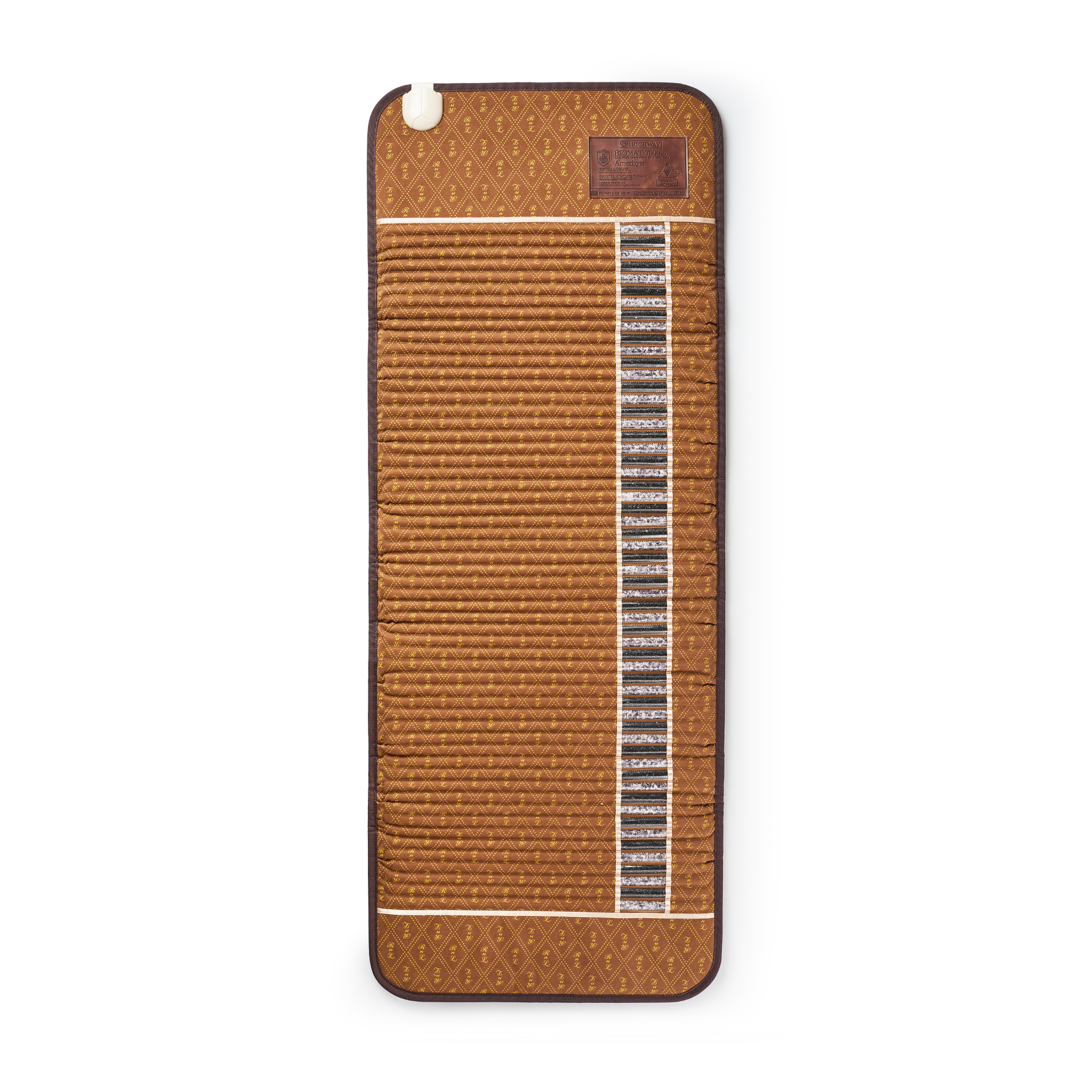
For those of you working way up, Gold settings (131°F to 140°F) are best for times when deeper penetration is the goal. Daily sessions rather than occasional long ones tend to produce cumulative improvements in joint mobility and comfort. If you’d like a full-body approach rather than targeting specific zones, the BioMat® Professional provides head-to-toe coverage.
Timing Your Sessions For Maximum Benefit
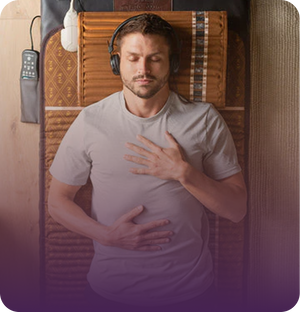
In terms of timing, morning stiffness peaks in the first 30 to 60 minutes after waking when synovial fluid viscosity is highest. A 20 to 30-minute BioMat® session before rising warms your body with soothing heat, so you can start with comfortable joints that have been therapeutically soothed by Far Infrared heat.

Infrared Mat For Arthritis: What The Research Shows
The research behind Far Infrared for arthritis isn't anecdotal. Osteoarthritis is a degenerative joint condition involving cartilage breakdown, while rheumatoid arthritis and ankylosing spondylitis are autoimmune conditions involving systemic inflammation. Far Infrared has relevant peer-reviewed clinical evidence, addressing joint inflammation regardless of its underlying cause.
Rheumatoid Arthritis And Ankylosing Spondylitis
A clinical study on Far Infrared sauna therapy in patients with rheumatoid arthritis and ankylosing spondylitis found statistically significant reductions in pain and stiffness during treatment. Fatigue also decreased. Notably, no adverse effects were reported, suggesting that Far Infrared therapy was well-tolerated in this patient group (Oosterveld et al., 2009).
Osteoarthritis: Randomized Controlled Trial Results
A randomized, placebo-controlled trial published in Reumatismo examined Far Infrared therapy in 60 patients with knee osteoarthritis. Pain scores were significantly lower at one week and one month compared to placebo, with the effect size increasing over time, which suggests FIR may be a useful, non-invasive choice for managing this condition (Bagnato et al., 2012). How the BioMat Works: Infrared, Amethyst and Ions covers how the BioMat®'s Far Infrared wavelengths, Amethyst crystal conductivity, and Negative Ion generation work together in every session.
Far Infrared And Fibromyalgia
For users managing fibromyalgia alongside arthritis, a common overlap, Far Infrared's full-body coverage offers particular relevance. Unlike targeted treatments that address one joint at a time, a single BioMat® session can reach multiple pain sites simultaneously. Fibromyalgia: The Mysterious Disease That Targets Women covers how Far Infrared supports fibromyalgia users whose widespread connective tissue pain often overlaps significantly with arthritis symptom profiles.

Far Infrared Heating Pad: Advantages Over Standard Pads
The BioMat® isn't a heating pad with crystals added for marketing purposes. The crystal construction is what makes the Far Infrared output therapeutically different from what a generic pad can produce.
Amethyst Amplification And Even Coverage
Natural Amethyst's hexagonal crystal structure distributes Far Infrared evenly across the entire mat surface with no hot spots or cooler zones. For arthritis users with multiple affected joints, this even distribution means simultaneous therapeutic coverage rather than requiring repositioning. Amethyst's thermal conductivity properties also support deeper penetration at lower surface temperatures, which is particularly relevant for users who need extended sessions at comfortable heat levels.
Black Tourmaline Negative Ions And Oxidative Stress
Heated black Tourmaline generates approximately 3,236 Negative Ions per cubic centimeter throughout every BioMat® session. The thing is, joint pain generates free radicals, which are unstable molecules that quietly damage healthy cells over time if left unchecked. Negative Ions may help neutralize these, supporting a more comfortable internal environment alongside the soothing thermal benefits of Far Infrared (Jiang et al., 2018).
Electromagnetic Field-Free Therapeutic Heat
Carbon fiber heating elements and integrated EMF-blocking layers deliver Far Infrared warmth without the electromagnetic exposure associated with standard electric heating elements. For anyone using a therapeutic device daily for months or years, that distinction is worth prioritizing. Every component in the BioMat® has undergone the safety, biocompatibility, and performance testing required for FDA 510(k) Class II Medical Device clearance.
Maintaining that clearance requires over $1 million annually in quality control and compliance testing. That means every BioMat® unit continues to meet the original evidence standards on an ongoing basis, not a one-time approval with no further accountability. Generic infrared heating pads aren't subject to any equivalent requirement, and their therapeutic claims are rarely independently reviewed.
Frequently Asked Questions About Infrared Therapy For Arthritis
Is the BioMat® safe for users with rheumatoid arthritis?
Clinical research found Far Infrared was well-tolerated in patients with rheumatoid arthritis. However, starting at lower settings and consulting your physician before beginning sessions is always recommended.
How long should arthritis users wait to notice improvement from BioMat® sessions?
Reduced morning stiffness is among the earlier outcomes users report, often within one to two weeks of consistent daily sessions. Broader improvements in baseline comfort and mobility tend to develop over two to four weeks.
Can the BioMat® be used alongside medications?
The BioMat® is a complementary wellness tool. However, people on medications are advised to consult their rheumatologist before beginning regular sessions to confirm compatibility with their treatment protocol.
Does the BioMat® help with fibromyalgia alongside arthritis?
Far Infrared's full-body coverage is particularly relevant for users managing both conditions simultaneously, since a single session can address multiple pain sites at once. Many users manage overlapping conditions with the BioMat® as part of their broader care approach.
Is the BioMat® Mini sufficient for arthritis, or is the Professional recommended?
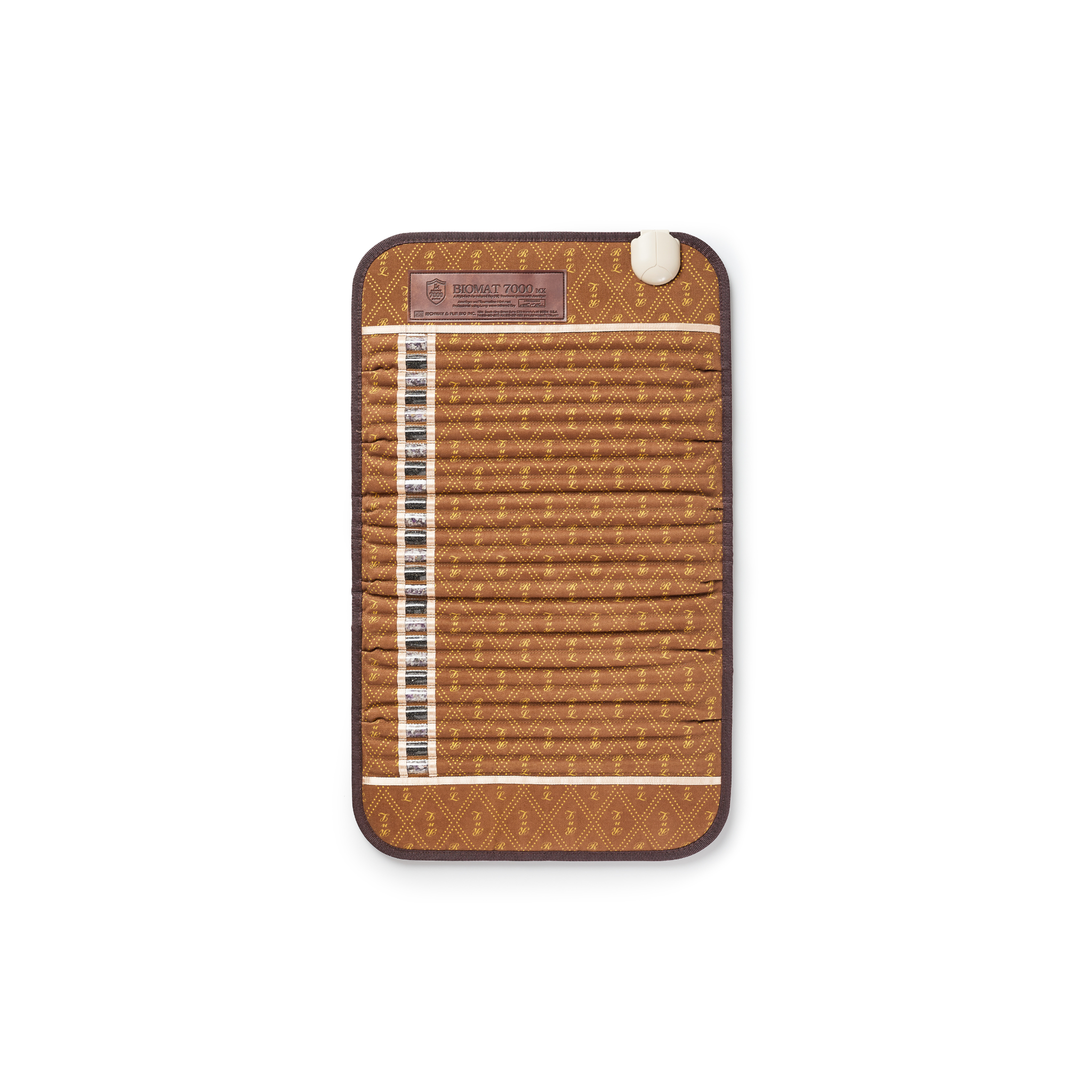
The Mini suits targeted sessions for areas like the back or hips. For widespread arthritis across the spine, hips, and knees, the Professional's full-body coverage is generally more appropriate.
Does BioMat® replace pharmaceutical arthritis treatment?
No. The BioMat® is a complementary device intended to be used alongside, not in place of, prescribed medical treatment. Always consult your physician before modifying any arthritis treatment protocol.
Sources:
- Oosterveld, F. G., Rasker, J. J., Floors, M., Landkroon, R., van Rennes, B., Zwijnenberg, J., van de Laar, M. A., & Koel, G. J. (2009). Infrared sauna in patients with rheumatoid arthritis and ankylosing spondylitis. A pilot study showing good tolerance, short-term improvement of pain and stiffness, and a trend towards long-term beneficial effects. Clinical rheumatology, 28(1), 29–34. https://doi.org/10.1007/s10067-008-0977-y
- Bagnato, G. L., Miceli, G., Atteritano, M., Marino, N., & Bagnato, G. F. (2012). Far infrared emitting plaster in knee osteoarthritis: a single blinded, randomised clinical trial. Reumatismo, 64(6), 388–394. https://doi.org/10.4081/reumatismo.2012.388
- Jiang, S. Y., Ma, A., & Ramachandran, S. (2018). Negative air ions and their effects on human health and air quality improvement. International Journal of Molecular Sciences, 19(10), 2966. https://doi.org/10.3390/ijms19102966
These statements have not been evaluated by the Food and Drug Administration. These products are not intended to diagnose, treat, cure, or prevent any disease. Specific medical advice should be obtained from a licensed health care practitioner.
Learn more about our editorial standards and medical review process.