


Key Takeaways:
- Depth Drives Outcomes: Therapeutic Far Infrared reaches 6 to 8 cm into tissue, where pain and stiffness originate.
- Verification Matters: FDA-registered devices carry independently reviewed indications, whereas unregistered Infrared pads cannot make equivalent claims.
- Crystals Add More: Natural Amethyst and Tourmaline deliver a Negative Ion layer no conventional heating pad can replicate.
Infrared heating pads have moved from clinical settings into mainstream wellness over the past decade, and with that shift has come a lot of noise. There are enthusiastic claims on one side, and dismissive skepticism on the other. The reality is more nuanced than either position. With that in mind, Far Infrared therapy has a science-backed research base, legitimate limitations, and meaningful differences in quality across products that determine whether any of that evidence applies to what you're using.
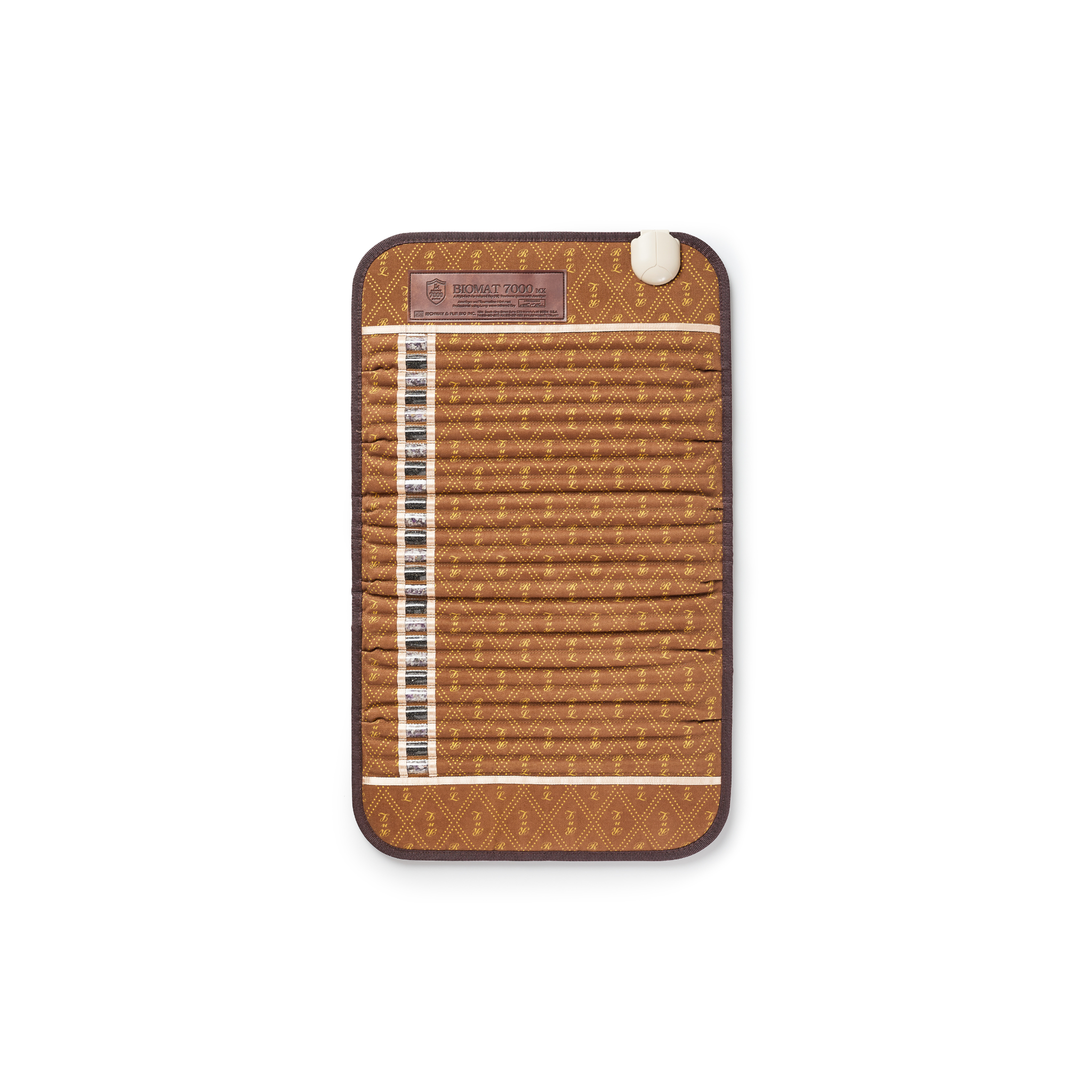
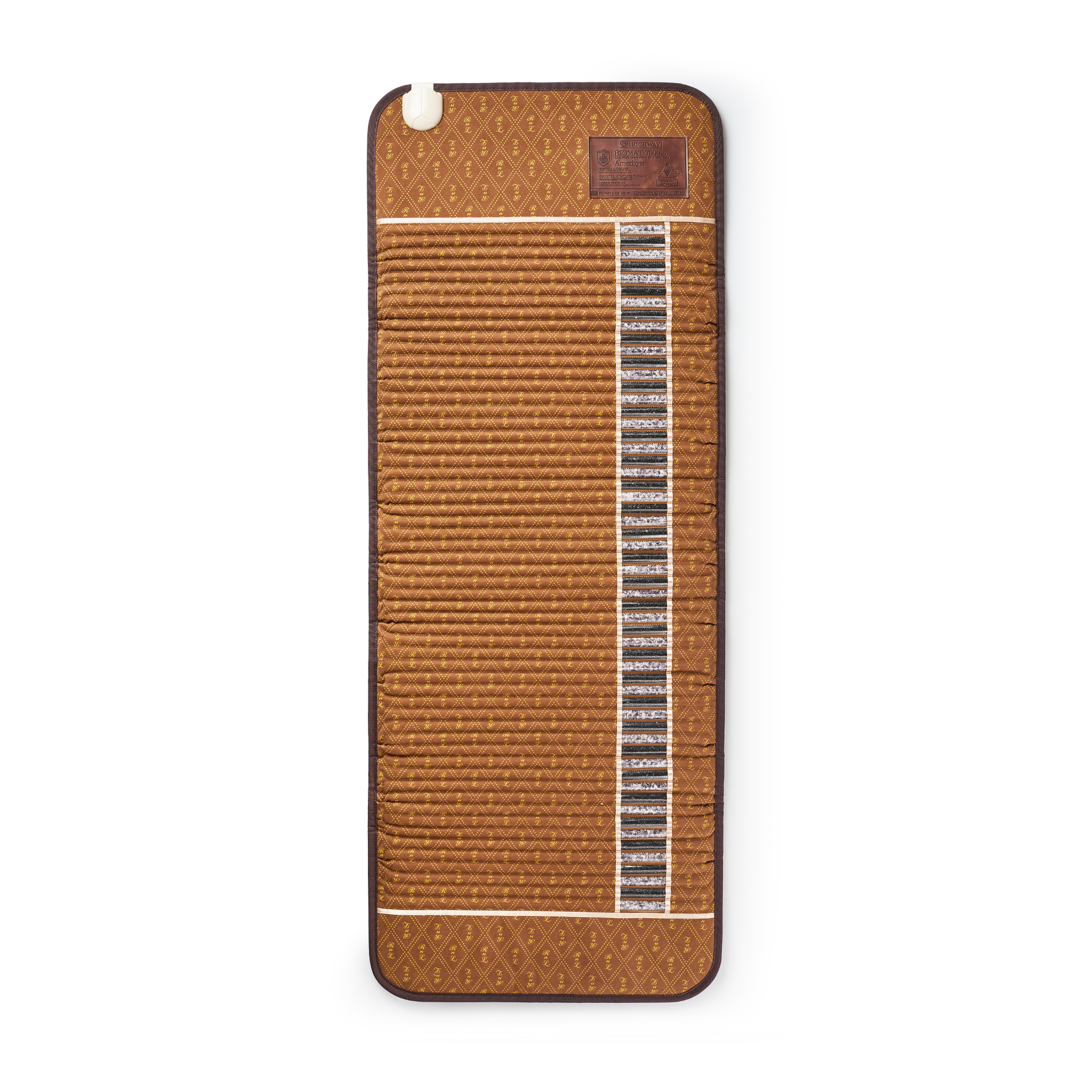
The BioMat® has been at the center of Far Infrared therapy for decades as an FDA 510(k) Class II registered Medical Device. We have spent over 25 years developing Far Infrared crystal therapy, trusted by more than 500,000 users and health professionals worldwide. That history gives us both the credibility and the responsibility to be honest about Infrared heating pad pros and cons.
This post covers what this technology does well, where it falls short, and what separates devices that deliver therapeutic outcomes from ones that only produce surface warmth.
Infrared Heating Pad Effectiveness: What The Research Supports
Far Infrared therapy has more peer-reviewed research behind it than most people realize, and the findings across independent studies are more consistent than the skepticism around it suggests.
Penetration Depth And Tissue Access
The most significant advantage of Far Infrared over standard heat is where it goes. For instance, a standard heating pad warms the skin and superficial muscles through conduction. By contrast, Far Infrared wavelengths in the 5.6 to 15 micron range are absorbed by water molecules in tissue, generating heat from within rather than from outside. This allows it to reach 6 to 8 centimeters below the skin, where joint capsules, synovial membranes, and deep muscle tissue are located. This is the tissue where arthritis, back pain, and inflammation originate. Surface heat doesn't reach it, but Far Infrared does. For a breakdown of the clinical research supporting this, Far Infrared Ray Therapy Benefits covers the published evidence in more detail.
Scientific Evidence For Localized Discomfort
In a randomized controlled trial, patients with knee osteoarthritis showed statistically significant reductions in pain scores at one week and one month compared to placebo, with joint effusion decreasing from 80% to 40% in the Far Infrared group (Bagnato et al., 2012). Further, a clinical study on patients with rheumatoid arthritis and ankylosing spondylitis found meaningful reductions in pain and stiffness during Far Infrared treatment, with no adverse effects reported (Oosterveld et al., 2009). Rather than wellness claims, these are peer-reviewed outcomes from controlled trials. For additional reading, Far Infrared Therapy for Autoimmune Support covers how Far Infrared specifically supports autoimmune conditions.
Circulatory And Recovery Perks
The way Far Infrared affects circulation is pretty straightforward. Heat causes blood vessels to dilate, allowing more oxygen to reach muscle tissue, and tension tends to ease as circulation improves. That mechanism, also known as vasodilation, is well understood, and it's why Far Infrared therapy has been studied consistently in the context of muscle relaxation and minor physical discomfort, and why those applications line up directly with the BioMat®'s FDA clearance for temporary relief of minor pain, muscle relaxation, and local circulation improvement. The same circulatory improvement that eases tension also supports recovery: better blood flow means the body can clear the byproducts of physical exertion more efficiently, which is part of why consistent Far Infrared use tends to leave people feeling less stiff and more balanced between sessions.

Is Infrared Heat Real? Addressing The Uncertainty
The skepticism around infrared heating pads is real, but it's directed at the right target only some of the time.
Where The Suspicion Is Valid
The wellness market is full of products that use "Infrared" as a marketing term while producing little more than surface heat through standard electric elements. Many budget mats use ceramic powder blends that emit some Infrared wavelengths but do so unreliably, without the wavelength precision or penetration depth that clinical research documents.
Without independent testing, and specifically without FDA medical device clearance, there's no verifiable way to confirm that what a budget product claims about its Infrared output is accurate. So when reviewers find that a $50 Infrared mat doesn't outperform a standard heating pad, they're often right, because it isn't delivering therapeutic Far Infrared heat at depth.
Where The Skepticism Misses
Far Infrared therapy with verified wavelength output and confirmed penetration depth has a consistent, growing evidence base. The doubt that applies to unverified consumer products doesn't apply to FDA-registered devices that have undergone clinical testing. What Separates the Best Infrared Mat from Basic Heating Pads covers precisely this distinction, namely what the research actually requires for therapeutic outcomes, and why product quality determines whether any of it applies.
Infrared Heating Pad vs. Regular Heating Pad: Key Differences
When comparing an Infrared heating pad vs. a regular heating pad, there are three dimensions in which the difference is meaningful and three in which it's often overstated.
Where Far Infrared Outperforms Standard Heat
Penetration depth is the most important distinction. Standard pads heat via conduction, with warmth transferring from the surface inward, reaching roughly 1 to 2 centimeters before dissipating. In contrast, Far Infrared is absorbed rather than conducted, reaching 6 to 8 centimeters where structural joints and connective tissue are located.
The second difference is the heat shock protein response, a cellular repair mechanism triggered when tissue temperature rises through internal absorption rather than surface conduction. When Far Infrared heats tissue from within, the body produces specialized proteins that help protect and repair cells at the molecular level, and some research suggests these proteins may also support the body's ability to manage oxidative stress, the kind of cellular damage that accumulates under chronic inflammation (Hu et al., 2022). Long story short, a standard heating pad warming the skin surface doesn't produce the same internal temperature change, so this response doesn't activate in the same way.
Third, the BioMat®'s heated Tourmaline crystals generate Negative Ions continuously throughout every session, molecules that may help neutralize free radicals that build up under physical and physiological stress, a layer of support that no standard heating pad includes. How the BioMat® Works covers how these three mechanisms function as a single integrated system.
Where The Difference Is Often Overblown
For mild surface muscle tension and general relaxation, a standard heating pad may provide short-term comfort at a fraction of the cost. Far Infrared's advantages matter most for conditions affecting tissue beyond the skin's surface, such as arthritis and recovery from physical exertion. For someone managing occasional mild soreness, the additional depth that Far Infrared provides may not produce noticeably different outcomes.

Infrared Heating Pad Downside: What To Know Before Buying
No honest evaluation of Infrared heating pads skips the limitations.
Contraindications And Safety Considerations
Far Infrared thermal therapy is not appropriate for everyone. Users with organ transplants, high fever, active tumors, or certain heart conditions should not use these devices. In addition, users who are pregnant or have diabetes, high blood pressure, pacemakers, or surgical implants require physician consultation before starting sessions. These aren't unique to Far Infrared, since they apply to any thermal therapy, but they're worth stating plainly rather than buried in fine print.
Price And Quality Variation
The infrared heating pad market ranges from $50 products of uncertain therapeutic value to FDA-registered medical devices at $850 and above. The jump in price reflects a gap in what's inside. To be specific, natural crystal materials, verified wavelength output, and ongoing regulatory compliance cost significantly more than generic ceramic elements and unverified claims. Buying at the low end of the market for the benefits documented in clinical research on the high end is the most common source of user disappointment with Far Infrared therapy.
Consistency Matters More Than Single Sessions
Far Infrared therapy produces cumulative results through regular use. Single sessions provide initial circulation improvement and relaxation, but meaningful baseline changes in pain, mobility, and stress response build over two to twelve weeks of consistent everyday use. Users who evaluate after one or two sessions and conclude it doesn't work are typically drawing conclusions before the mechanism has had time to compound.

Final Thoughts
The honest answer to whether infrared heating pads are worth it is that it depends on what you are buying and what you need it for. The technology is real, the physiological mechanism is documented, and the clinical evidence supports specific outcomes.
At BioMat®, transparency is what we build trust on. Our FDA-registered crystal Infrared therapy comes with a 30-day risk-free trial, a 3-year warranty, and 25+ years of development. Backed by science, inspired by nature, it is designed for people who want a therapeutic tool they can rely on every day.
Frequently Asked Questions About Infrared Heating Pad Pros And Cons
How long does it take to notice results from an Infrared heating pad?
Initial relaxation and some pain relief often occur within the first few sessions. Meaningful baseline improvements in ongoing pain and mobility typically build over two to four weeks of regular daily use.
Can Infrared heating pads be used every day?
Yes. Daily use at appropriate settings is recommended for cumulative results. Follow the manufacturer's guidelines for session duration and temperature based on your health status.
Is an Infrared heating pad safe to use during sleep?
Low-temperature settings are generally considered safe for extended use. The FDA has not evaluated the BioMat® specifically for use during sleep, so always follow the published safety guidelines and consult your physician if you have medical conditions.
Do Infrared heating pads help with nerve pain?
Far Infrared may help address inflammation that contributes to nerve compression, which might help relieve radiating pain in some users. However, always consult your physician for guidance.
What is the difference between near Infrared and Far Infrared in heating pads?
Near Infrared penetrates roughly 2 to 3 centimeters and is studied primarily for surface tissue and skin applications. Meanwhile, Far Infrared penetrates 6 to 8 centimeters and is the wavelength range documented for therapeutic outcomes in joints and deep muscles.
Are Infrared heating pads FSA or HSA eligible?
FDA-registered Class II medical devices are eligible for many FSA and HSA plans. Verify specific eligibility with your plan administrator before purchasing.
Sources:
- Bagnato, G. L., Miceli, G., Atteritano, M., Marino, N., & Bagnato, G. F. (2012). Far infrared emitting plaster in knee osteoarthritis: a single blinded, randomised clinical trial. Reumatismo, 64(6), 388–394. https://doi.org/10.4081/reumatismo.2012.388
- Oosterveld, F. G. J., Rasker, J. J., Floors, M., Landkroon, R., van Rennes, B., Zwijnenberg, J., van de Laar, M. A. F. J., & Koel, G. J. (2009). Infrared sauna in patients with rheumatoid arthritis and ankylosing spondylitis. Clinical Rheumatology, 28(1), 29–34. https://doi.org/10.1007/s10067-008-0977-y
- Hu, C., Yang, J., Qi, Z., Wu, H., Wang, B., Zou, F., Mei, H., Liu, J., Wang, W., & Liu, Q. (2022). Heat shock proteins: Biological functions, pathological roles, and therapeutic opportunities. MedComm, 3(3), e161. https://doi.org/10.1002/mco2.161
These statements have not been evaluated by the Food and Drug Administration. These products are not intended to diagnose, treat, cure, or prevent any disease. Specific medical advice should be obtained from a licensed health care practitioner.
Learn more about our editorial standards and medical review process.