Neck and shoulder discomfort rarely has a single cause. Three common drivers explain why this area tightens so easily and tends to stay that way.
Posture And Screen Time
The head weighs roughly 10 to 12 pounds, and every inch it drifts forward over a keyboard or phone adds strain to the muscles holding it up. Hours in that position overwork the muscles along the back of the neck and upper back, leaving them fatigued, shortened, and prone to aching by the end of the day. Rounded shoulders add to the problem by stretching the muscles between the shoulder blades while the chest muscles tighten.
Stress Lands In The Trapezius
The trapezius, which spans the neck and shoulders, tends to tighten when the body is under pressure. That guarding can become habitual, keeping the shoulders lifted long after a stressful moment has passed. Shallow breathing during stressful stretches also recruits neck muscles that should stay relaxed. Gentle, deep warmth may help interrupt that cycle by relaxing those muscle fibers and supporting the body’s shift toward a calmer state.
Stiffness In The Neck Joints
Over time, the discs and small joints of the neck can wear down, and stiffness is often worse in the morning or after long periods of stillness. Warmth is one of the simplest ways to ease that kind of stiffness. The BioMat® holds FDA 510(k) Class II Medical Device clearance for temporary relief of minor joint pain and stiffness, including joint pain associated with arthritis, and our article on Infrared therapy for arthritis explains how deeper warmth reaches stiff joint tissue.
How To Set Up The Best Heating Pad For Neck And Shoulders
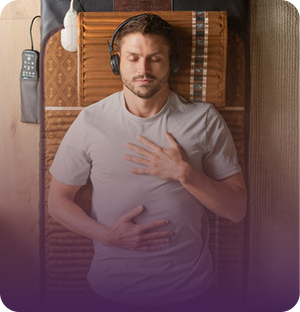
A flat pad alone rarely reaches this area well, so the best setup is built around where you already rest, whether that’s a desk chair, the couch, or your bed. Each option below comes from our Far Infrared heating pad collection.
The Workday Chair: A Neck And Shoulder Heating Pad At Your Desk
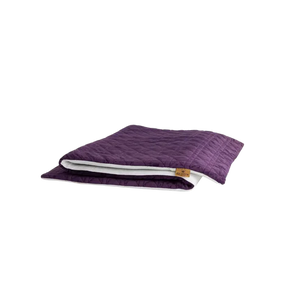
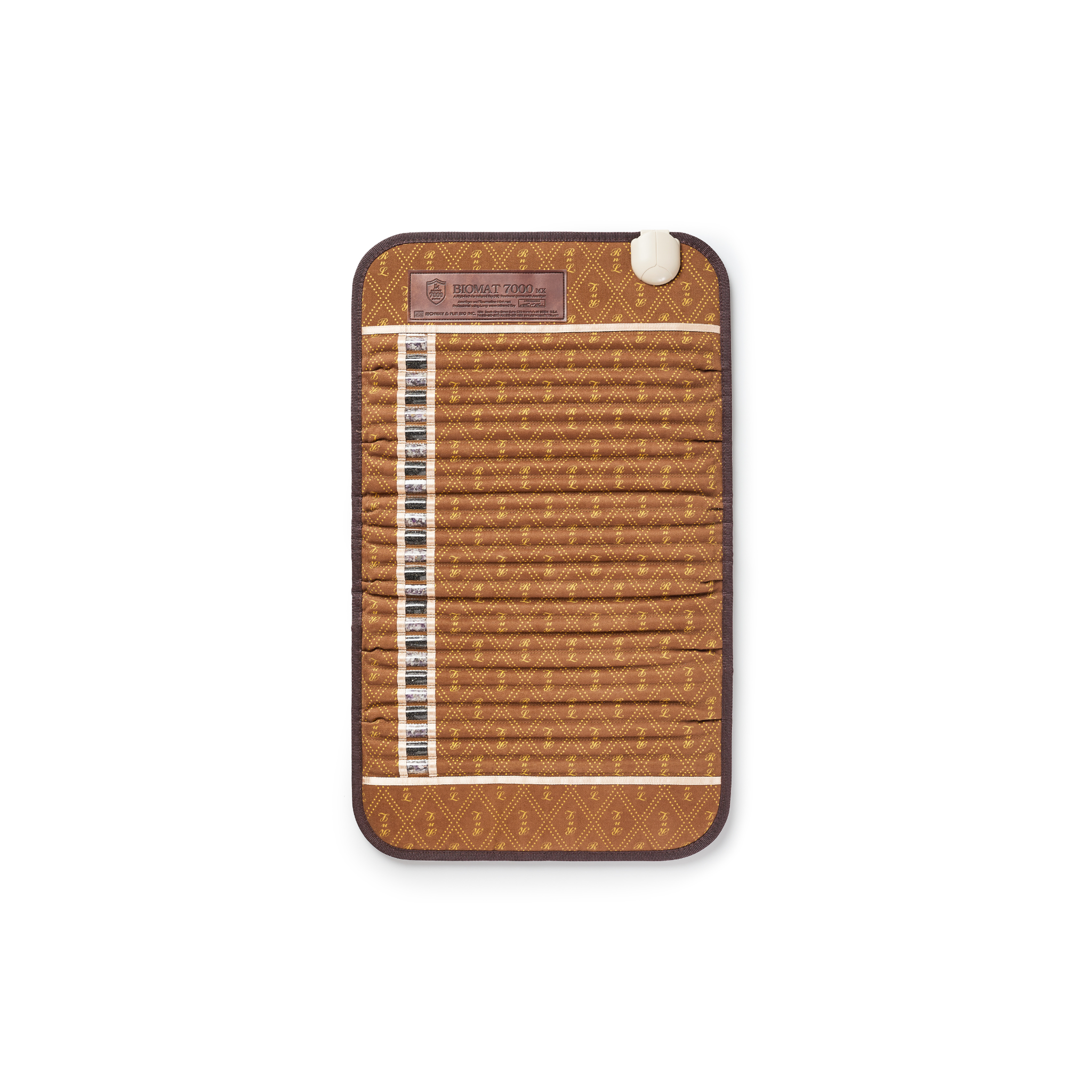
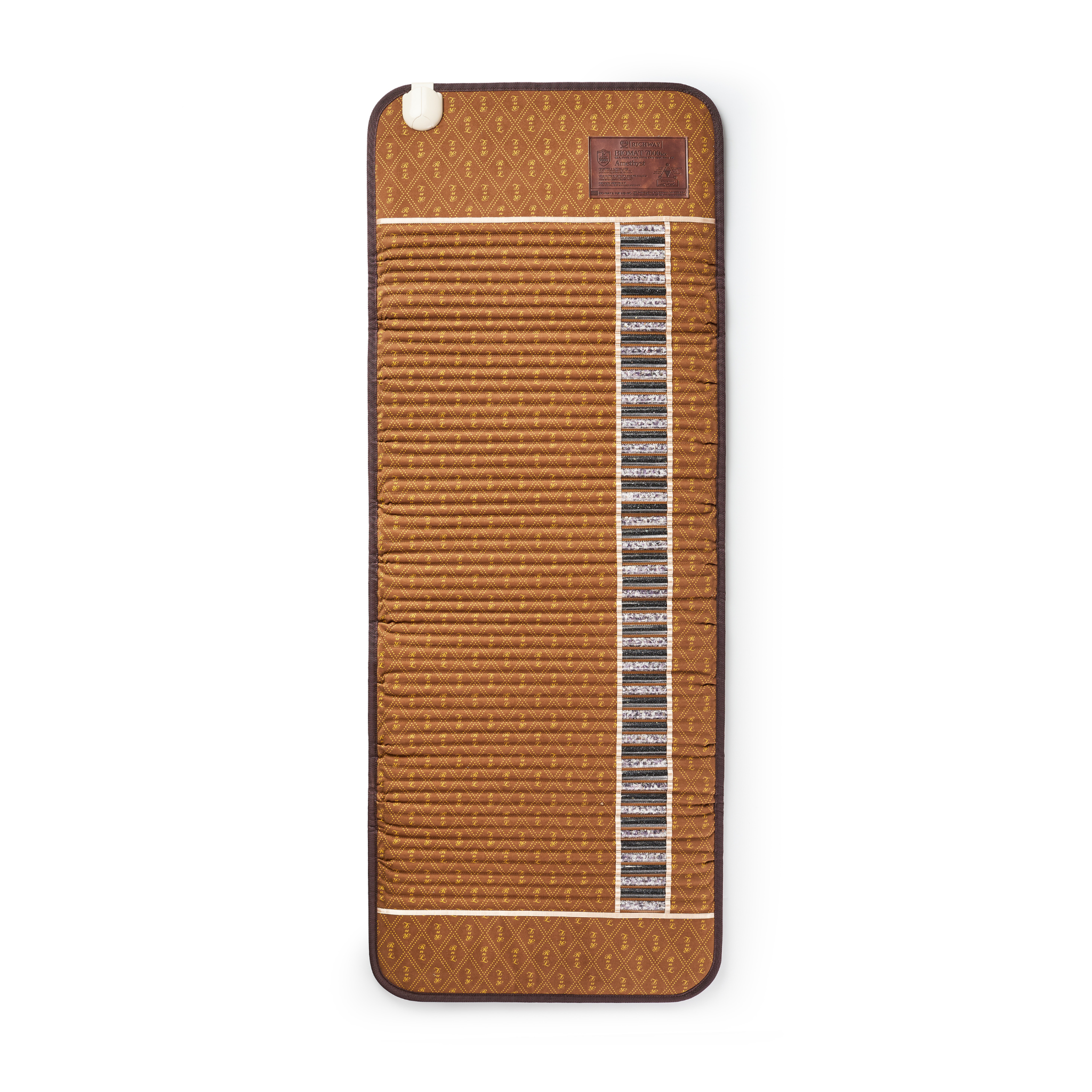
The BioMat® Mini measures 20" x 33" and weighs just 8 pounds. Stood upright against an office chair, it places Far Infrared warmth, Negative Ions, and natural Amethyst and black Tourmaline crystals right behind the neck, shoulders, and upper back while you work through emails, calls, and meetings. It comes with an intuitive temperature controller, a 100% cotton quilted cover, a carrying case, a user manual, and a free Germanium Waterproof Cover. If your neck and shoulder tension is mostly a workday problem, our Infrared mat for desk workers collection gathers the options that fit seamlessly into office life.
The Lie-Flat Setup
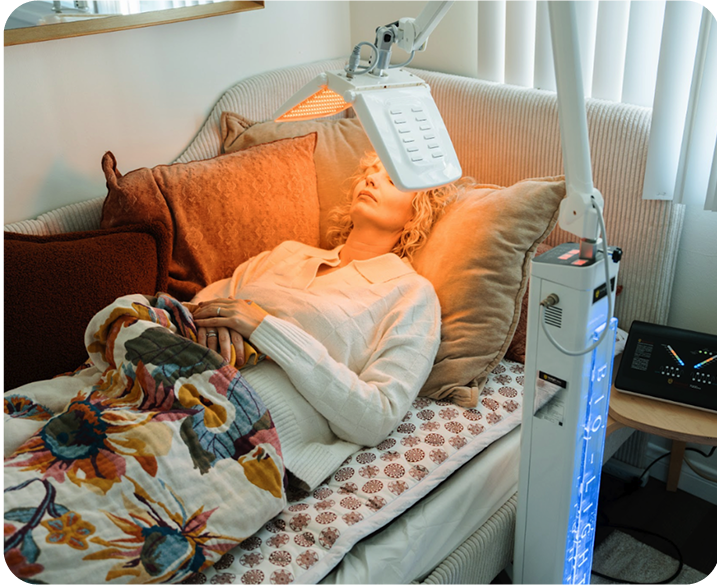
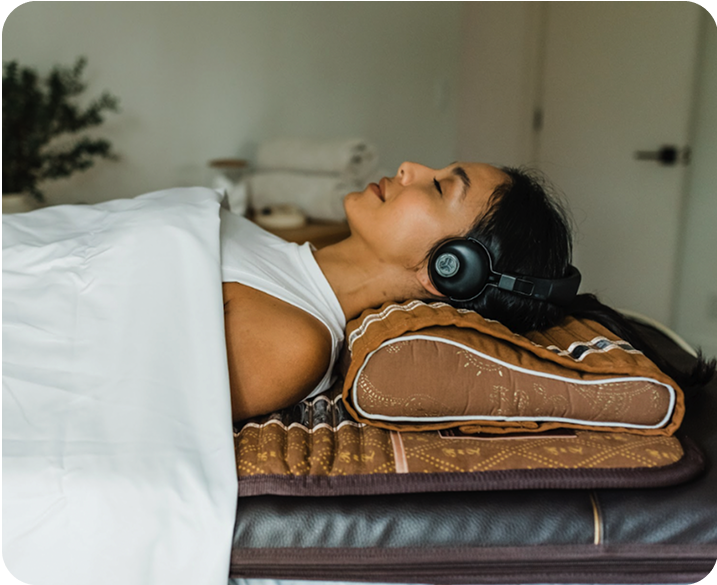
The BioMat® Professional measures 27.56" x 74", so the neck, shoulders, and entire spine warm together in one session. Pair it with the Amethyst Pillow, a non-heated, non-electrical pillow filled with crushed Amethyst and Tourmaline. Its contoured shape cradles the natural curve of the neck and keeps the head cool while the mat warms the rest of the body. The Professional includes the same full accessory kit as the Mini, and wellness professionals, veterans, first responders, and individuals on the autism spectrum can take $100 off with valid documentation. You can compare every format side by side in our Infrared heating pad collection.
The One Stubborn Shoulder Setup
The BioBelt provides deep-penetrating Far Infrared heat and Negative Ions through an 18" x 8" heating area that reaches up to 149°F. Its adjustable strap fits up to 58.5", allowing you to wrap a stiff shoulder joint while the rest of your body stays free to move. Plus, it ships with its own digital controller for precise settings.
Using Heat Therapy For Neck Pain Safely
The neck holds sensitive structures close to the surface, so warmth here deserves a gentler approach than the lower back or legs. These guidelines help keep every session comfortable.
Start Gentle With An Infrared Heating Pad For Neck Sessions
Skin on the neck is thinner than on the back and tends to react more quickly to heat. Begin on the gentle blue setting (95 to 104°F), and increase only after several relaxing sessions. If your skin turns deep red or feels tender afterward, drop back one setting next time. Keep the breathable, washable 100% cotton cover between your skin and the mat to keep warmth even, and drink water before and after, since sustained warmth can encourage light sweating.
How Often To Use Heat On The Neck
Sessions of 20 to 60 minutes suit most routines, with shorter sessions at higher settings. Many people split their warmth into two shorter sessions across the day, which helps keep tension from building between them. Let your skin return to its normal color and temperature between sessions, and avoid draping a heated pad around the front of the throat.
Know When Cold Fits Better
A fresh strain or whiplash injury with swelling usually calls for cold during the first 48 to 72 hours, using a pack wrapped in a thin towel for about 15 minutes at a time. Signs of a fresh injury include warmth to the touch, visible swelling, or pain that sharpens with movement. Heat tends to be helpful once the swelling settles and stiffness sets in. From there, our Infrared mat for pain relief lineup offers options for steady, everyday comfort.
Desk Habits That Ease Neck And Shoulder Strain
Warmth helps tight muscles relax, while small workspace changes lessen the strain that tightens them in the first place. These habits work alongside any heat routine.
- Raise Your Screen: Position the top of your monitor at eye level so your head stays properly balanced over your shoulders.
- Support Your Arms: Use armrests or a desk height that keeps your elbows at about 90 degrees and your shoulders relaxed and down.
- Take Movement Breaks: Stand, walk, or stretch every 30 to 60 minutes to keep neck muscles from locking in place.
- Practice Chin Tucks: Gently draw the chin straight back several times a day to strengthen the deep muscles that support your neck.
- Roll Your Shoulders: Slow backward shoulder rolls between tasks help release built-up tension across the upper back.
- Lift Your Phone: Hold your phone closer to eye level instead of looking down to decrease the forward pull on your neck.
These statements have not been evaluated by the Food and Drug Administration. These products are not intended to diagnose, treat, cure, or prevent any disease. Specific medical advice should be obtained from a licensed health care practitioner.
Learn more about our editorial standards and medical review process.