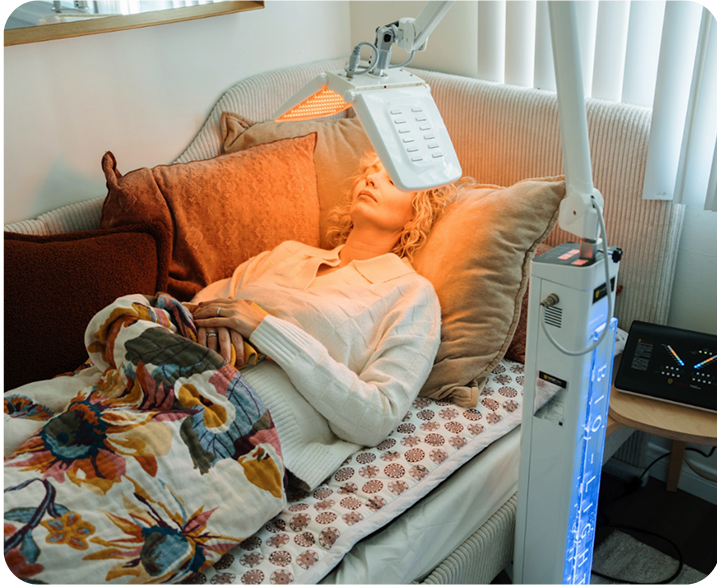
An Infrared sauna works by heating the air. Heaters mounted inside a wooden cabinet emit Far Infrared into the enclosed space, which warms the air to roughly 120–150°F. Your body then absorbs that hot air across a 30–60 minute session. You sweat, your heart rate climbs, and your body works to cool itself.
Here's the part the sauna industry doesn't talk about much: most of what your body experiences in a sauna is ambient convective heat, not direct Far Infrared absorption. The FIR wavelengths themselves can penetrate roughly 1.5 inches into tissue [1], but only the portion that actually reaches your skin. A meaningful amount is absorbed or scattered by the air between the heaters and your body, and by whatever clothing or towel is in the way. The deeper therapeutic effect is real, but it's diluted by the delivery method.
For some people, that intensity is still the appeal. The ritual, the sweat, the contained sense of doing something serious for your health. It's real, and it's effective when it actually happens. The catch is everything around the session.
A sauna requires roughly 16+ square feet of permanent floor space, a 220V electrical outlet, ventilation to manage moisture, and ongoing maintenance to prevent mold and wood deterioration. It stays where you install it. If you rent, move, travel, or share a small home, the sauna stays behind. And because each session demands changing, sweating, and showering after, sauna use tends to become an event rather than a daily habit, which is why so many home saunas end up used twice a month instead of four times a week.
Saunas are good for:
- People with dedicated space and a large wellness budget
- Anyone who genuinely loves the sweat-driven, immersive ritual
- Weekly intensive sessions rather than daily integration
How the BioMat Delivers Far Infrared
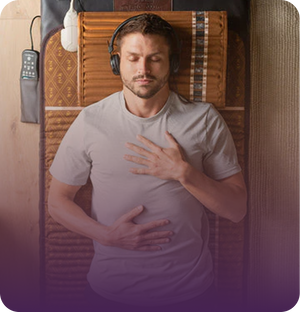
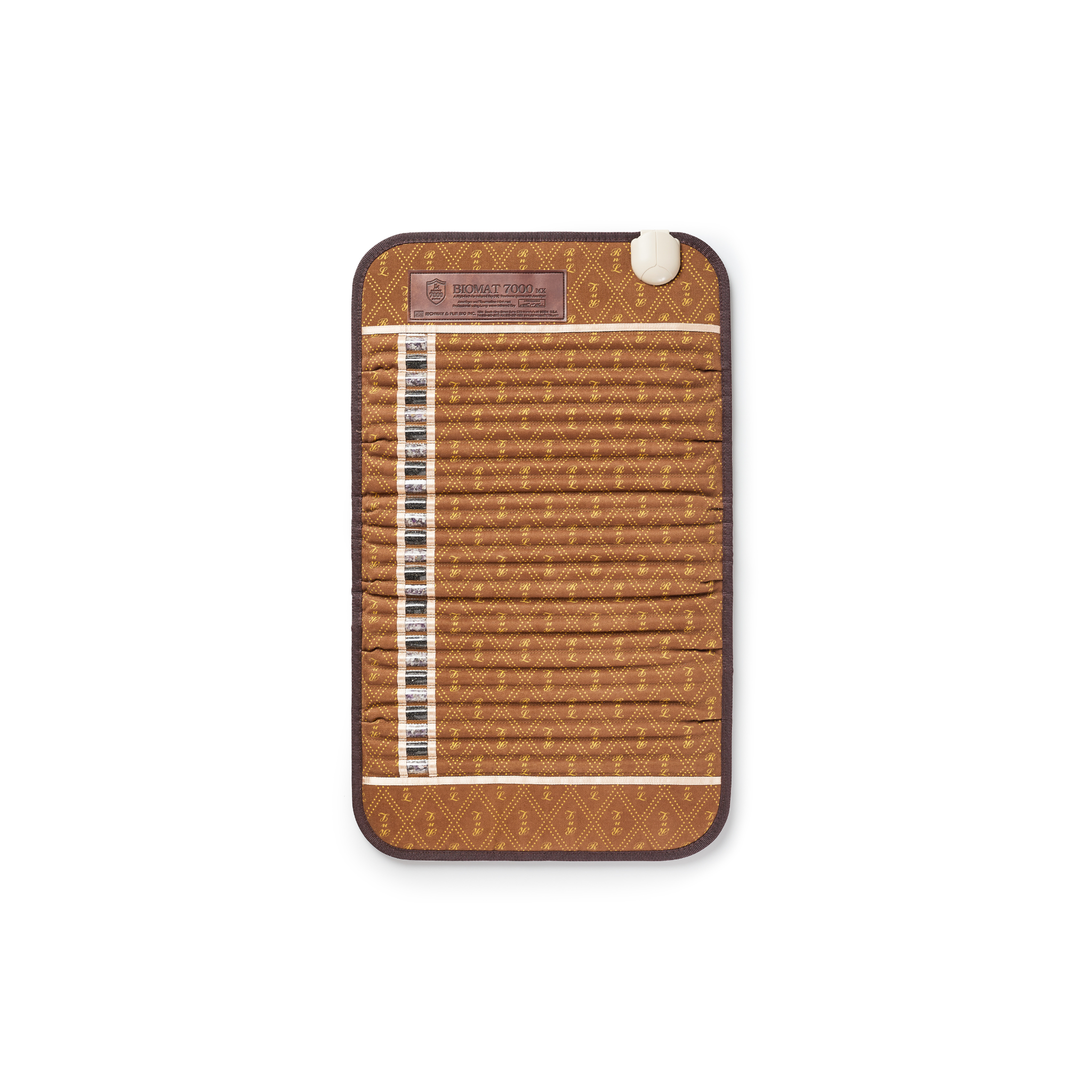
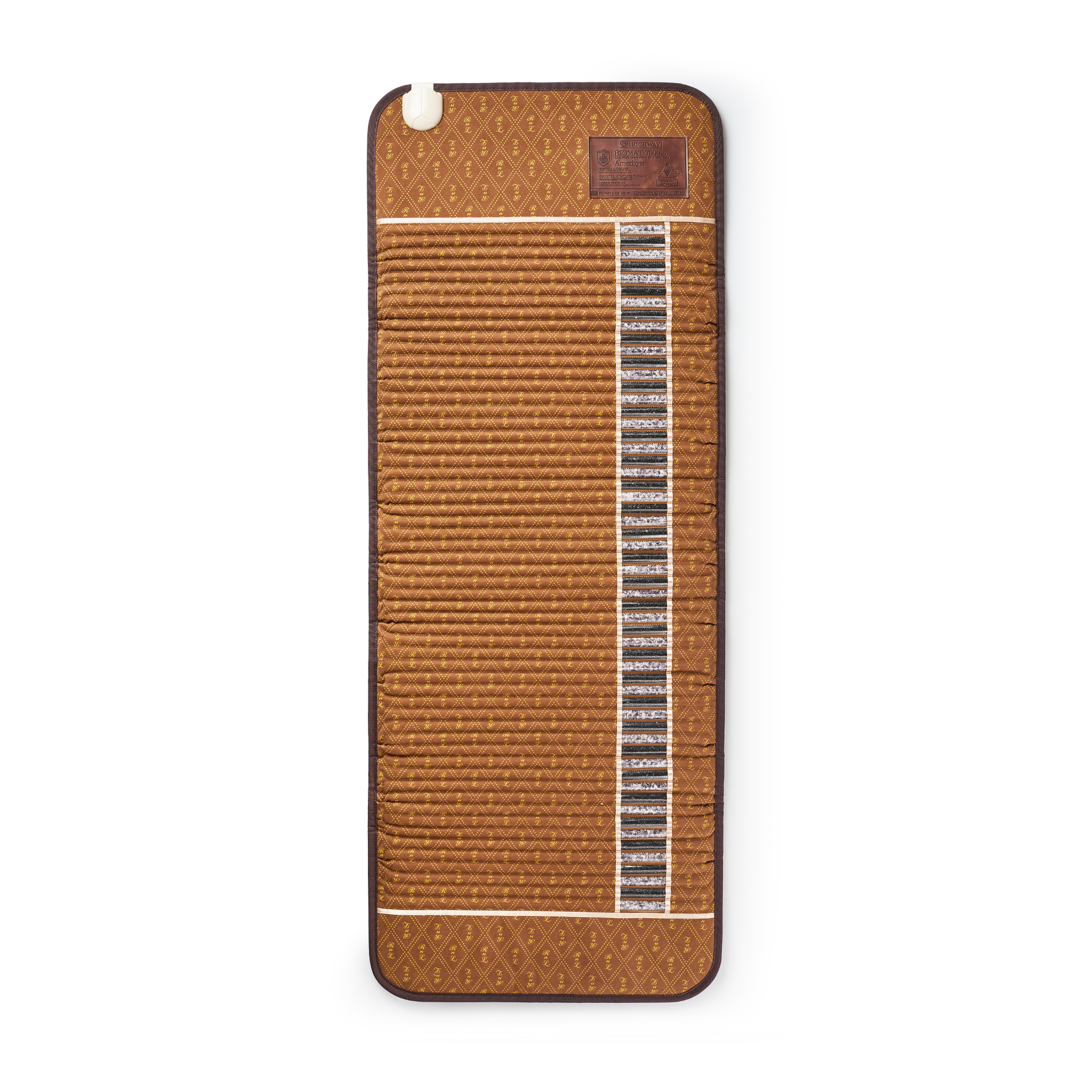
The BioMat takes a more direct route to the same wavelengths. Instead of heating the room, the BioMat's heated Amethyst and Tourmaline crystals emit Far Infrared rays that your body absorbs through direct contact. There's no air gap, no convective transfer, no clothing-scatter loss. The FIR travels from the crystal layer straight into tissue, penetrating approximately 6–8 cm beneath the skin and generating warmth from within. [1] This more efficient delivery is part of why FIR therapy clinical results have shown such encouraging effects on circulation, pain, and recovery.
A sauna and a BioMat both produce Far Infrared in the same therapeutic wavelength range. But a sauna has to push those wavelengths through several feet of hot air before they reach you, and the air carries most of the heat your body actually feels. The BioMat eliminates that middle step. Direct contact means the delivered dose of FIR to tissue is more efficient. You get the deep-penetrating benefit without needing to heat a room to make it happen.
The Amethyst layer adds another piece. Amethyst is one of the most efficient natural emitters of Far Infrared radiation, and it's believed to stabilize the wavelength output in a narrower, more bio-compatible band than what raw electrical heating elements produce. [2] So you're not just getting FIR, you're getting FIR that's been filtered through a natural crystalline emitter before it reaches you.
That single shift in delivery changes everything about how the therapy fits into real life.
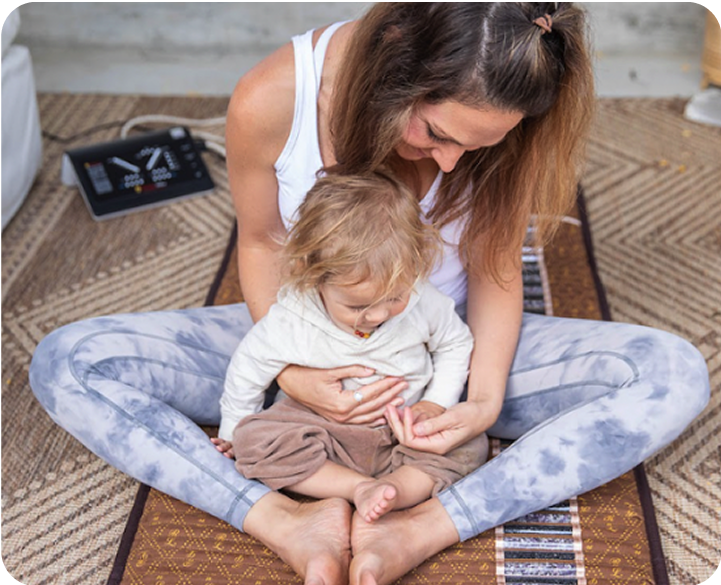
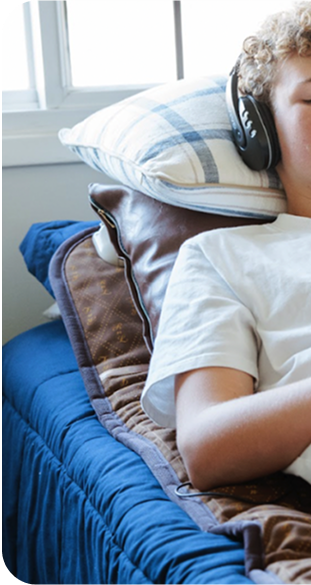
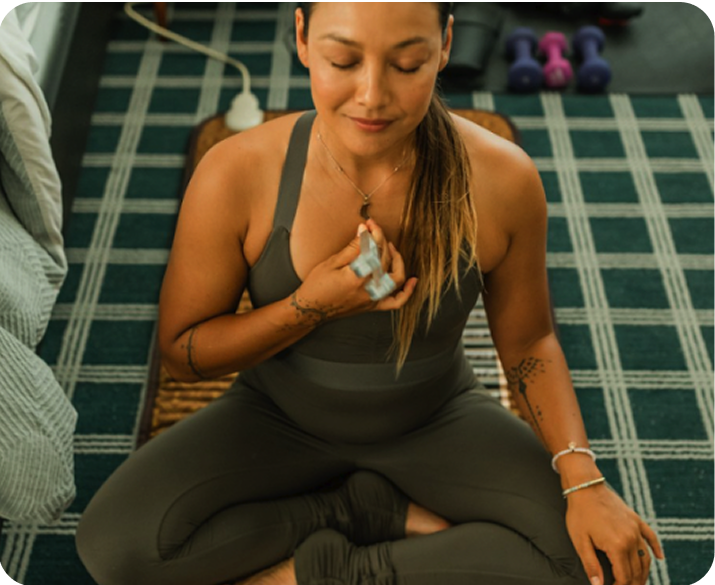
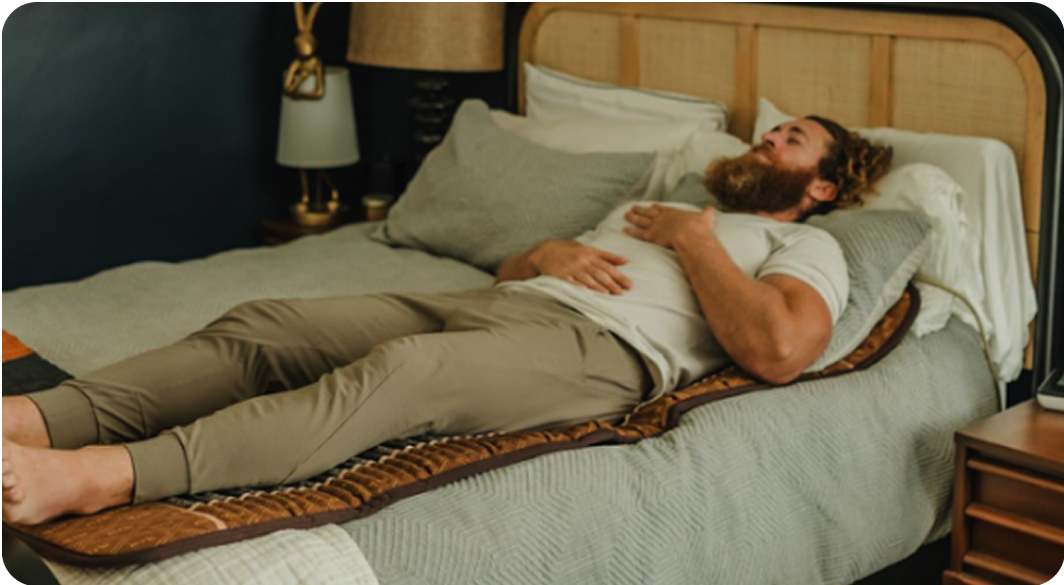
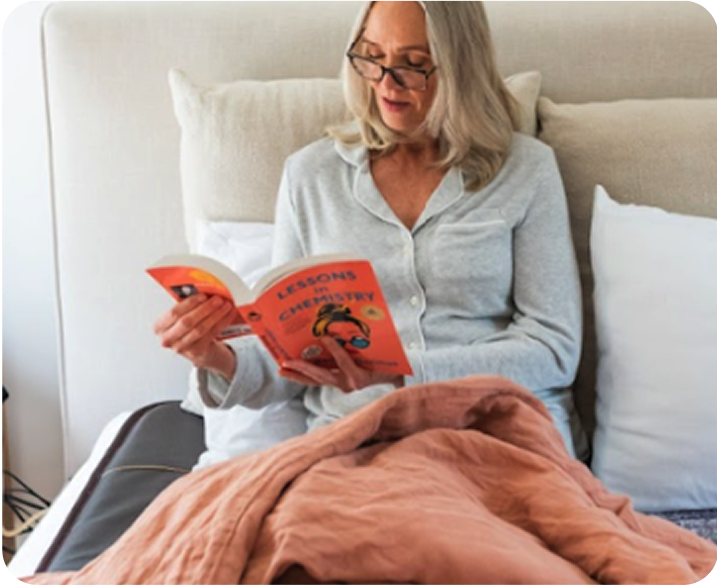
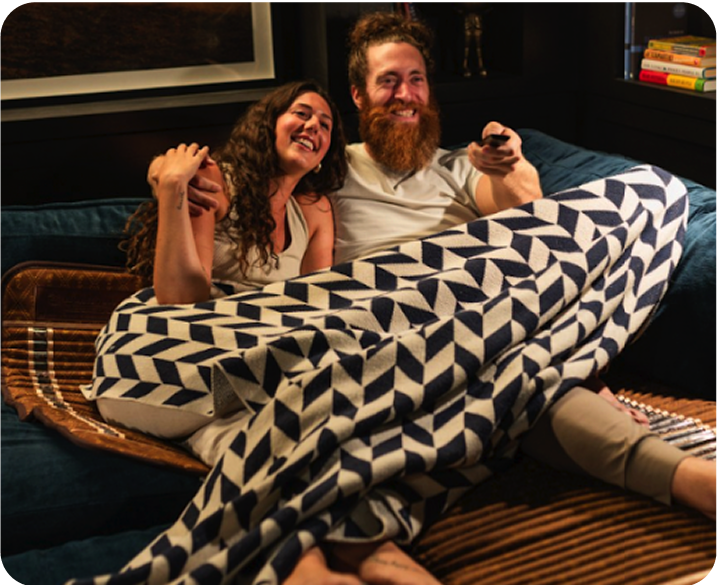
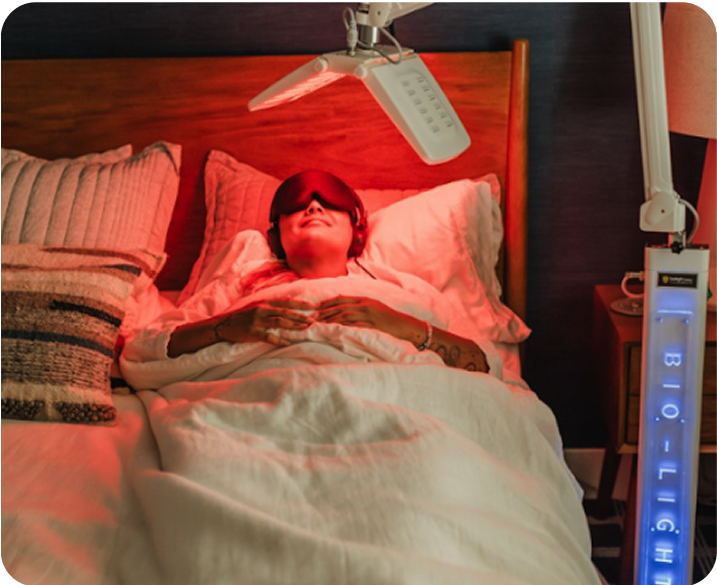
You stay clothed. You lie down on your couch, your bed, a massage table, or the floor. You don't need a dedicated room, ventilation, a 220V outlet, or a shower afterward. Sessions run 20–60 minutes, you can read or rest or watch TV, and when you're done, the mat folds and slides under your bed or into a closet. It travels. It moves with you when your life changes.
This is what tends to surprise new BioMat owners: the lower barrier to entry is exactly what produces results. The best wellness tool is the one you actually use, and a mat that lives within arm's reach gets used. A sauna in the garage often doesn't.
Fun Fact: The BioMat's origin story begins in Korea, where the founders owned an amethyst mine — originally mined for jewelry. Over time, they started noticing something strange: people who spent time inside the mine reported feeling better. Pain eased. Sleep improved. Something about being surrounded by all that amethyst was doing something. They started investigating why, and the answer turned out to be Far Infrared — amethyst is one of the most efficient natural emitters of it. The BioMat was built to bring that effect out of the mine and into your living room. [2]
What Infrared Saunas Don't Offer: Negative Ions and Crystal Therapy
Far Infrared delivery is where the comparison begins, not where it ends. The BioMat stacks two more therapies into every session, both of which a sauna, by design, simply cannot offer.
Negative Ions
The BioMat has been third-party tested at just over 3,200 ions/cm³, comparable to clean country air near waterfalls, forests, and the ocean. Modern indoor environments (air-conditioned offices, sealed buildings, urban air) are typically depleted of them and measure around 50-200 ions/cm³, which is part of why those environments can feel energetically draining over time. Research suggests Negative Ions are a big reason why nature feels so restorative: they support mood, reduce stress, and help the nervous system downshift. [3][4]
Amethyst and Tourmaline Crystals
Amethyst stabilizes and amplifies the Far Infrared output for a more consistent, penetrating session. [2] Tourmaline generates Negative Ions naturally and continuously, regardless of whether the controller is actively producing ions electrically. [4]
A sauna produces heat. The BioMat produces direct-contact heat, Negative Ions, and crystal-mediated Far Infrared simultaneously. The experience reflects this. Users consistently describe a BioMat session as the physiological equivalent of finally exhaling, whereas a sauna session often feels stimulating first and calming after.
There's also the Ayurvedic principle of cool head, warm body, keeping the head cool while warming the body is considered one of the most balanced states for the nervous system. A sauna heats everything, including your head. The BioMat warms the body while your head stays at room temperature. It's a small difference that changes how the session actually feels.
Is an Infrared Sauna FDA-Approved? Why the BioMat's Medical Device Status Matters
The BioMat is an FDA-registered Class II Medical Device. That designation means it has undergone rigorous third-party safety and efficacy testing, meets Good Manufacturing Practice (GMP) requirements, and has been reviewed as substantially equivalent to a legally marketed device for safety and effectiveness. [5]
Most Infrared saunas, on the other hand, are consumer appliances. They don't go through clinical efficacy testing. They don't carry FDA-recognized therapeutic indications. They typically don't qualify for FSA or HSA purchases. The BioMat does. [5] And that's not a small distinction when you're spending real money.
Infrared Sauna vs. BioMat: The Full Comparison
This far infrared sauna comparison lays out how they stack up across every dimension that matters:
Heat Delivery
- Infrared Sauna: Indirect — FIR heats the air, body absorbs convective heat
- BioMat: Direct contact — FIR transfers straight from crystals to tissue
FIR Delivery Efficiency
- Infrared Sauna: Diluted by air, distance, and clothing
- BioMat: Maximized through skin contact, no air gap
Penetration Depth
- Infrared Sauna: ~1.5 in / 3.8 cm where FIR reaches skin directly
- BioMat: ~2.4–3.1 in / 6–8 cm into muscle, joint, fascia via direct contact
Session Temperature
- Infrared Sauna: 120–150°F room
- BioMat: Normal room temp; mat heats 95–158°F
Session Length
- Infrared Sauna: 30–60 minutes
- BioMat: 20–60 minutes
Negative Ions
- Infrared Sauna: No
- BioMat: Yes (~3,200/cm³)
Crystal Technology
- Infrared Sauna: No
- BioMat: Amethyst + Tourmaline
Nervous System Effect
- Infrared Sauna: Stimulating first, calming after
- BioMat: Calming throughout
Sleep + Wind-Down
- Infrared Sauna: Often too stimulating before bed
- BioMat: Supports priming for deep sleep
Daily Use
- Infrared Sauna: Difficult to commit to
- BioMat: Easy to integrate
Space Required
- Infrared Sauna: 16+ sq ft, dedicated room
- BioMat: Stores in a closet
Electrical
- Infrared Sauna: 220V outlet + installation
- BioMat: Standard wall outlet
Effort Per Session
- Infrared Sauna: Change, sweat, shower, recover
- BioMat: Lie down and exhale
Portability
- Infrared Sauna: None — fixed installation
- BioMat: Travels easily
Maintenance
- Infrared Sauna: Wood treatment, ventilation, mold prevention
- BioMat: Wipe down with non-toxic spray or wash included covers
Cost
- Infrared Sauna: $3,000–$15,000 + installation
- BioMat: BioMat Mini $850 / BioMat Professional $2,150
FDA Status
- Infrared Sauna: Consumer appliance
- BioMat: Class II Medical Device (510(k) cleared)
FSA / HSA Eligible
- Infrared Sauna: Generally no
- BioMat: Yes
Best For
- Infrared Sauna: Sweat-driven weekly ritual
- BioMat: Whole-body recovery, nervous system regulation, daily use, sleep
Which BioMat is Right For You?
Every BioMat delivers the same core technology. What changes is coverage and how the mat fits your day. And if you're weighing the BioMat against cheaper imitations, here's why the BioMat stands apart from other mats on the market.
BioMat Professional
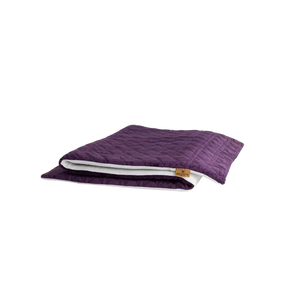
Full-body, the closest thing to a sauna without the cabinet. 27.56" x 74", 24.25 lbs, 19lbs of Amethyst and Tourmaline, temperature range 95–158°F. Fits a standard massage table, a bed, or the floor. Comes with a 100% cotton quilted cover, the Germanium Waterproof Cover, a temperature controller, a carrying case, and the manual. If you want the full-body Far Infrared experience without giving up a room, this is the one.
BioMat Mini
Portable, targeted, easy to travel with. 20" x 33", 8 lbs, same 17-layer construction as the Professional size. Designed for the back, shoulders, chest, or legs, and it fits on an office chair, a car seat, or a couch. Travels well, costs less, and includes the full accessory kit.
Still deciding? Our Pro vs. Mini comparison walks through it in detail.
BioBelt
Wearable Far Infrared. Far Infrared and Negative Ion therapy in an 18" x 8" belted form that wraps around your waist, lower back, abdomen, or joints. Adjusts up to 58.5" and reaches up to 149°F. For targeted relief without building a session around it.
Amethyst Pillow
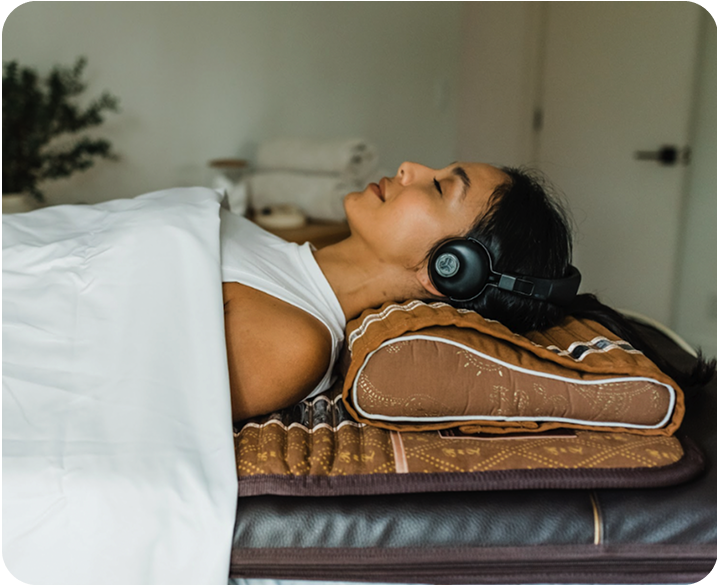
Complete the energetic field, head to toe. For people who want the full BioMat experience from the crown to the feet, without heating the head. Non-heated and non-electrical, the Amethyst Pillow is filled with crushed Amethyst and Black Tourmaline, so the same crystal therapy running through your BioMat extends all the way up your entire body inside one continuous energetic field, while your head stays cool and comfortable.
Infrared Sauna or Infrared Mat: Which Should You Choose?
A sauna is a commitment. The BioMat is a lifestyle.
If you own your home, have a room you're genuinely not using, your budget comfortably covers $5,000+ including installation, and you love the sweat-driven ritual of an enclosed session, get the sauna. It's a real therapy, and it will do what it does well.
If you rent, plan to move, share a small space, want therapy that fits into your real routine instead of requiring a separate one, or simply want to start experiencing Far Infrared therapy without a five-figure investment, the BioMat is one of the best sauna alternatives at home you'll find. Same wavelengths, more efficient delivery, deeper integration into daily life, plus Negative Ions and crystal therapy that a sauna can't offer.
The best wellness tools are the ones you use consistently.
References:
- Vatansever F, Hamblin MR. Far infrared radiation (FIR): its biological effects and medical applications. Photonics Lasers Med. 2012;4:255–266.
- Takahashi M, et al. Emissivity of amethyst crystals and far infrared emission characteristics. J Phys Chem B. 2008.
- Perez V, et al. Air ions and mood outcomes: a review and meta-analysis. BMC Psychiatry. 2013;13:29.
- Nakane H, et al. Effect of negative air ions on computer operation, anxiety and salivary chromogranin A-like immunoreactivity. Int J Psychophysiol. 2002;46(1):85–89.
- Richway & Fuji Bio Inc. BioMat 7000MX Product Documentation and FDA Device Registration. biomat.com.
These statements have not been evaluated by the Food and Drug Administration. BioMat products are not intended to diagnose, treat, cure, or prevent any disease. Specific medical advice should be obtained from a licensed healthcare practitioner.