


Key Takeaways:
- Origin Changes Everything: Far Infrared heat generated inside tissue produces physiological outcomes that surface-applied heat can’t reliably achieve.
- Evidence Is Consistent: Research across pain and stress consistently points in the same supportive direction across studies.
- Delivery Determines Depth: Amethyst crystal channels and Negative Ion science mean Far Infrared reaches deeper structures, not just skin.
Most people encounter the term "Far Infrared therapy" and immediately wonder whether it’s genuinely different or just heat with a scientific name attached. It’s a fair question, and the answer matters before committing to any wellness decision.
What sets Far Infrared apart from conventional heat is where it goes. A heating pad warms your skin, whereas Far Infrared wavelengths are absorbed by the body's water molecules, generating heat from within the tissue rather than conducting it inward from the surface. That difference in mechanism is why researchers continue to study Far Infrared and why it's made its way into professional wellness settings around the world. At BioMat, we've spent over 25 years building FDA-registered technology around this science, combining Far Infrared heat with Negative Ions and natural Amethyst and Tourmaline crystals, a system trusted by more than 500,000 users and practitioners worldwide.
So, what is Far Infrared therapy? In this article, we cover how it works, what the research shows, and why penetration depth matters.
How Does Far Infrared Therapy Work?
To start, Far Infrared rays are invisible wavelengths of light that sit just beyond the visible red spectrum, part of the same family as natural sunlight, minus the UV radiation. NASA was among the first to study them seriously, looking at their potential effects on circulation and cellular function in astronauts. Since then, they've attracted growing clinical interest across pain management and recovery research.
From The Inside Out: How Far Infrared Heats The Body
Far Infrared light occupies the 5.6 to 15 micron wavelength range of the electromagnetic spectrum, well outside what the eye can see, but well within what the body can absorb. When these wavelengths contact the body, they cause water molecules in tissue to vibrate. That vibration generates friction, and the friction produces heat from within the tissue outward, rather than from outside inward. The result is warmth that reaches 6 to 8 centimeters below the skin's surface, accessing joint capsules, deep muscle fibers, and connective tissue that surface heat can't reach.
Why Depth Changes Everything
That depth is the whole story. Surface heating pads work through conduction, meaning they warm whatever they touch and rely on the body's own thermal diffusion to distribute that warmth inward. Far Infrared bypasses that process entirely. The heat is generated at depth, which is why the therapeutic mechanisms associated with Far Infrared, namely vasodilation, heat shock protein activation, and cellular repair, are meaningfully different from what a standard pad produces.
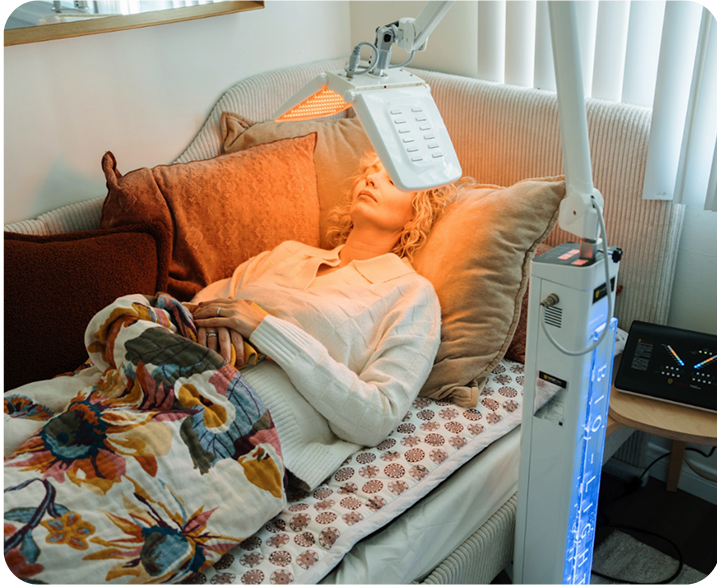
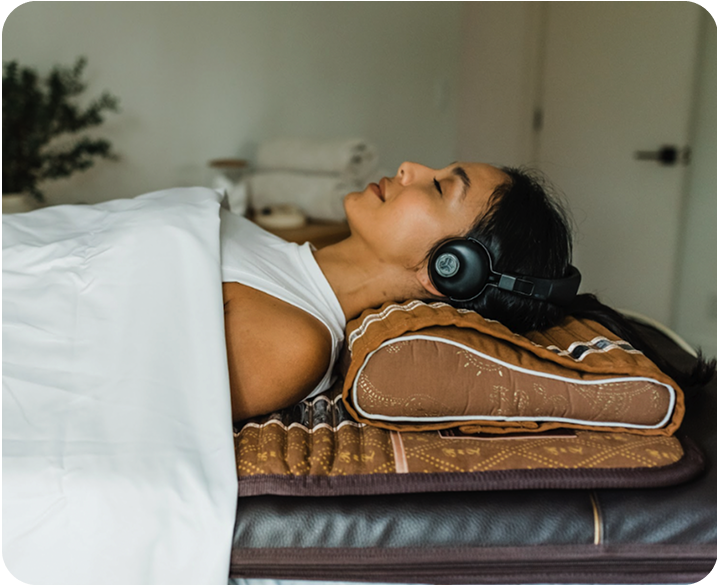
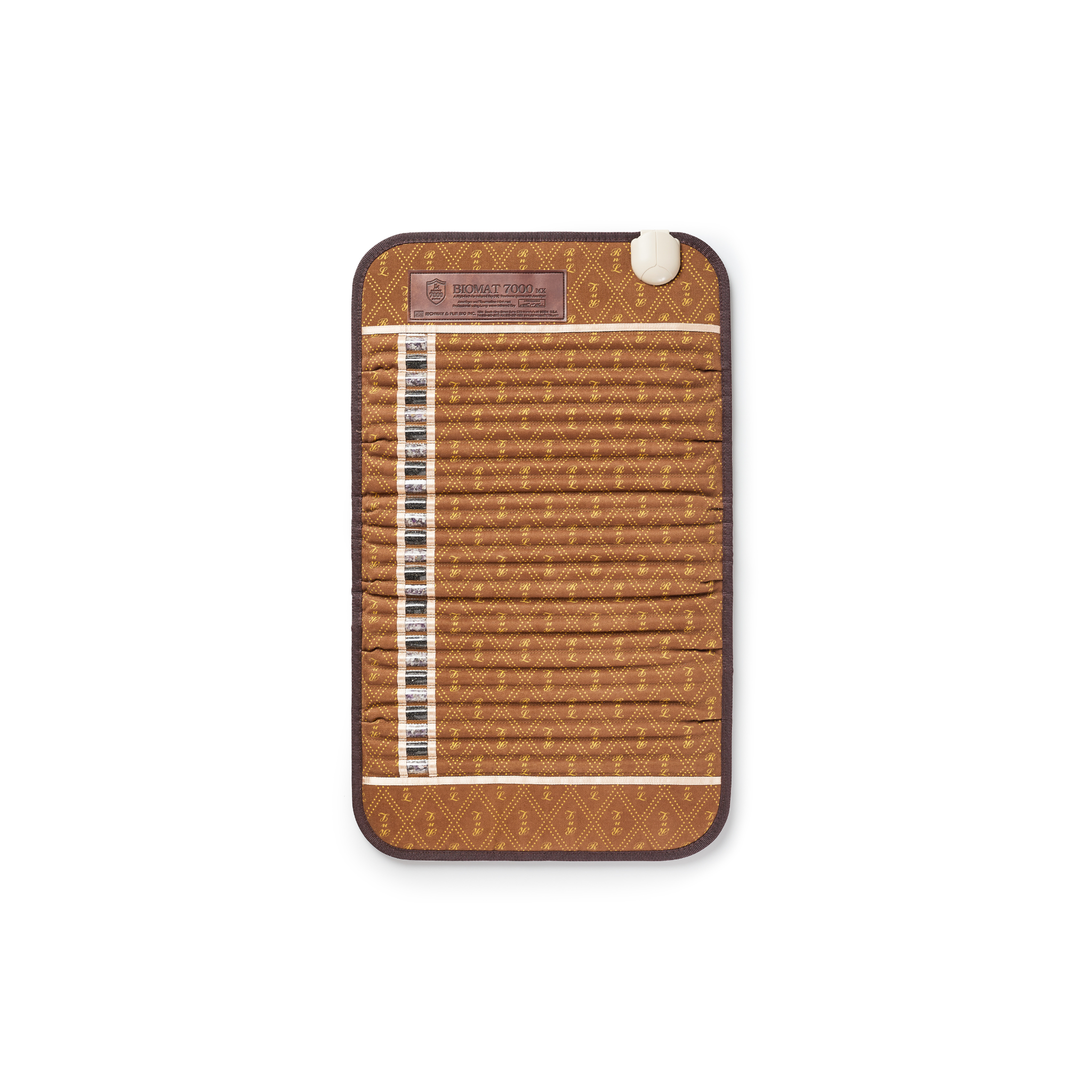
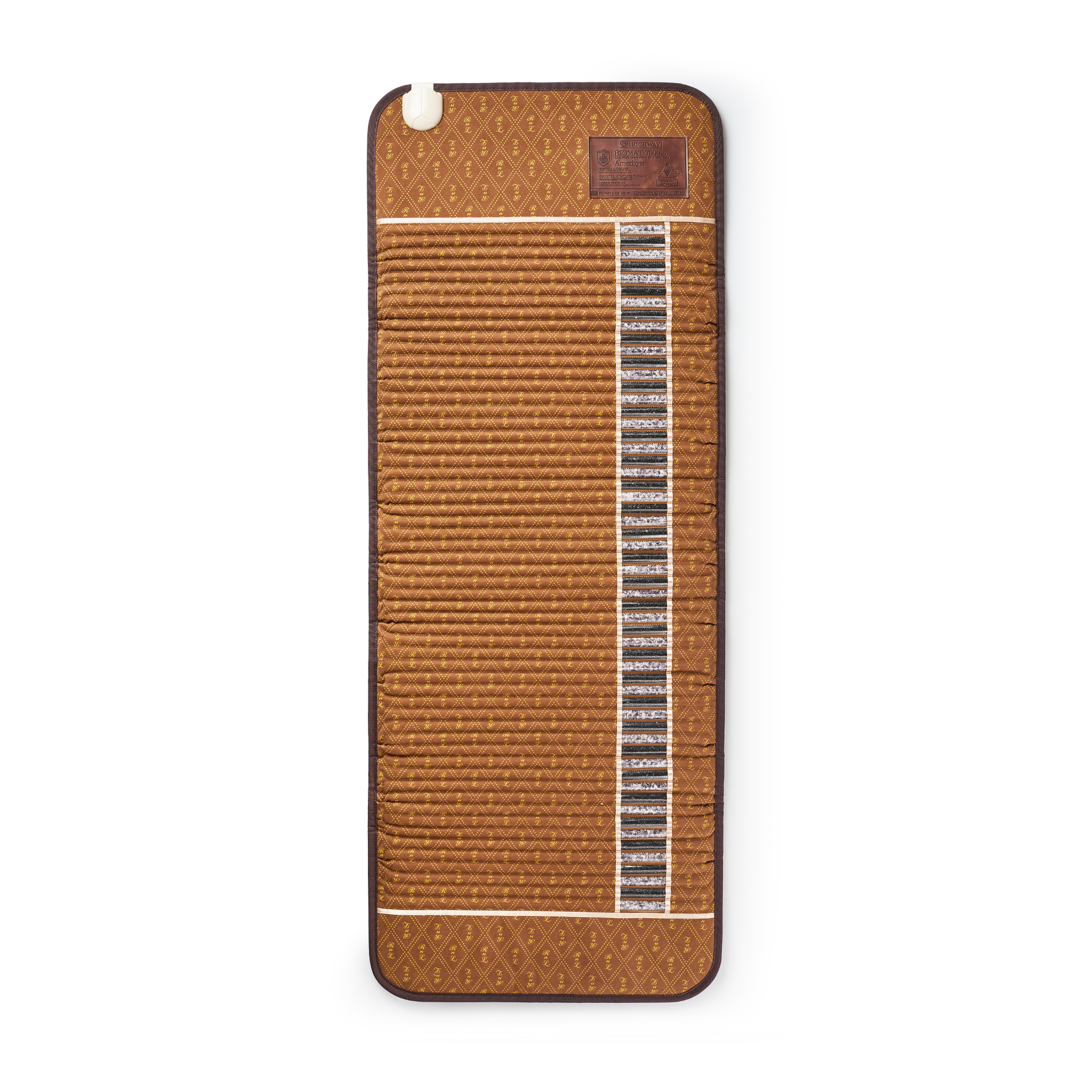
How that Far Infrared is delivered also matters. The BioMat® passes it through natural Amethyst crystal channels, which amplify and distribute the output more evenly across the treatment surface, while heated black Tourmaline crystals generate Negative Ions alongside the thermal therapy throughout every session, a layer of support that standard heating elements simply don't include. How the BioMat® Works covers the full three-layer system behind Far Infrared delivery through Amethyst crystal conductivity and Tourmaline Negative Ion generation.

Far Infrared Therapy Science: What Happens Inside The Body
The physiological effects of Far Infrared aren't speculative. Rather, they follow directly from the absorption mechanism.
Vasodilation And Circulation
When Far Infrared raises tissue temperature from within, blood vessels in the area widen. This allows for more oxygen-rich blood to reach muscle and joint tissue, and the byproducts of physical stress, such as lactic acid, typically get cleared more efficiently. This is the mechanism behind Far Infrared's FDA-cleared indications for local circulation improvement and temporary relief of minor pain and muscle stiffness. It's also why Far Infrared has been studied in recovery contexts, where improving post-exertion clearance is directly relevant to how quickly the body bounces back.
Heat Shock Protein Activation
One of the more scientifically interesting effects of Far Infrared is the heat shock protein response. When internal tissue temperature rises through Far Infrared absorption, the body produces specialized proteins involved in protecting and repairing cells at the molecular level. Research associates these proteins with cellular stress management and suggests they may support the body's ability to manage oxidative stress, the cellular damage that accumulates under chronic inflammation (Hu et al., 2022). This response is specific to internal tissue heating, since surface conduction from a standard pad doesn't produce the same cellular signal.
Far Infrared Therapy Benefits: What The Research Documents
The evidence base for Far Infrared therapy is more developed than most people realize, and it spans several distinct therapeutic applications. Far Infrared Ray Therapy: Clinical Results Reveal Promise pulls the published research together across conditions, and it’s worth reading for anyone who wants to go deeper than a summary.
Pain Management And Joint Discomfort
Joint pain is one of the most consistently studied applications of Far Infrared therapy, and the results across independent trials point in the same direction. One randomized controlled trial found that patients with knee osteoarthritis using a Far Infrared emitting device experienced statistically significant pain reductions at both one week and one month compared to a placebo group, with joint swelling dropping from 80% to 40% in the FIR group while the placebo group saw no change (Bagnato et al., 2012).
A separate clinical study looked at patients with rheumatoid arthritis and ankylosing spondylitis, two autoimmune joint conditions, and found significant reductions in pain and stiffness during Far Infrared treatment sessions, with no adverse effects reported (Oosterveld et al., 2009). Both studies involved conditions where inflammation originates in joint tissue that surface heat doesn't reach, which is why Far Infrared's depth advantage translates directly into measurable outcomes. These findings are also why Far Infrared therapy holds FDA clearance specifically for arthritis pain, joint stiffness, and minor pain relief. Our article on the Top 3 Benefits of Far Infrared for Health covers the most relevant benefits in plain language.
Stress And Cortisol
Far Infrared heat activates the parasympathetic nervous system, the body's rest-and-recovery state, which supports cortisol reduction alongside physical relaxation. An independent 12-week study by Dr. George Grant using daily BioMat® sessions documented up to 78% cortisol reduction among participants, measured through biofeedback and blood analysis. To view the larger evidence base, check out our Research page.

Far Infrared vs. Regular Heat: Why The Mechanism Matters
Put simply, a standard heating pad transfers thermal energy through conduction. So, it warms your skin, and some of that warmth diffuses inward over time. The depth it reaches depends on how hot the surface gets and how long it stays there. On the other hand, Far Infrared doesn't rely on surface temperature to deliver depth. Instead, its wavelengths are absorbed directly by water molecules in tissue regardless of what's happening at the skin surface. That's why Far Infrared can deliver therapeutic warmth at 6 to 8 centimeters at relatively comfortable surface temperatures, while a standard pad would have to reach potentially unsafe surface temperatures to approach equivalent depth through conduction alone.
The practical consequence is that Far Infrared reaches the tissue structures like joint capsules, synovial membranes, and deep muscles where conditions like arthritis, constant back pain, and injury recovery are actually located. To summarize, surface heat addresses the skin and superficial muscle. For conditions affecting deeper structures, the depth difference isn't a detail; it's the whole therapeutic case.

Final Thoughts
Far Infrared therapy isn’t a new concept with a modern label. It’s a well-studied form of light energy with a documented cellular mechanism, a consistent evidence base across multiple clinical areas, and a 25+ year track record in professional wellness settings worldwide.
At BioMat®, we built our FDA-registered crystal mat to deliver Far Infrared therapy reliably in a format that fits daily life. Every element of our 17-layer construction, from Amethyst crystal conductivity to Tourmaline-generated Negative Ions, has a documented reason to be there. Backed by science and inspired by nature, our 30-day risk-free trial and 3-year warranty mean the decision carries no risk.
Frequently Asked Questions About What Far Infrared Therapy Is
Is Far Infrared therapy the same as a sauna?
Far Infrared saunas and crystal mats both use FIR wavelengths, but a crystal mat delivers full-body contact at therapeutic depth without requiring a heated enclosed room, making it more practical for daily home use.
Is Far Infrared therapy safe for long-term daily use?
For healthy adults without contraindications, daily use in appropriate settings is considered safe. Users with specific medical conditions should consult their physician before starting.
How long should a Far Infrared therapy session last for a beginner?
Starting with 20 to 30 minutes at a lower temperature setting allows the body to adapt. Session length can be gradually extended based on comfort and individual response.
Does Far Infrared therapy work through clothing?
Thin, natural fabrics such as cotton have minimal impact on FIR transmission. However, thicker or synthetic fabrics might impact therapeutic output, so direct or near-direct contact is generally recommended.
Is Far Infrared therapy appropriate for people with implanted devices?
Users with implanted electronic devices such as pacemakers or metal implants should consult their physician before beginning Far Infrared therapy sessions.
How does Far Infrared therapy differ from red light therapy?
Red light therapy uses visible wavelengths that target the skin surface, whereas Far Infrared uses longer, invisible wavelengths absorbed by water molecules in tissue, generating heat from within at significantly greater depth.
Sources:
- Hu, C., Yang, J., Qi, Z., Wu, H., Wang, B., Zou, F., Mei, H., Liu, J., Wang, W., & Liu, Q. (2022). Heat shock proteins: Biological functions, pathological roles, and therapeutic opportunities. MedComm, 3(3), e161. https://doi.org/10.1002/mco2.161
- Bagnato, G. L., Miceli, G., Atteritano, M., Marino, N., & Bagnato, G. F. (2012). Far infrared emitting plaster in knee osteoarthritis: a single blinded, randomised clinical trial. Reumatismo, 64(6), 388–394. https://doi.org/10.4081/reumatismo.2012.388
- Oosterveld, F. G. J., Rasker, J. J., Floors, M., Landkroon, R., van Rennes, B., Zwijnenberg, J., van de Laar, M. A. F. J., & Koel, G. J. (2009). Infrared sauna in patients with rheumatoid arthritis and ankylosing spondylitis. Clinical Rheumatology, 28(1), 29–34. https://doi.org/10.1007/s10067-008-0977-y
These statements have not been evaluated by the Food and Drug Administration. These products are not intended to diagnose, treat, cure, or prevent any disease. Specific medical advice should be obtained from a licensed health care practitioner.
Learn more about our editorial standards and medical review process.