


Key Takeaways:
- Light depth determines outcomes: Far Infrared penetrates 6-8 centimeters into tissue. Red light penetrates only 1 to 2 centimeters, limiting its effect to surface structures.
- Heat shock proteins improve outcomes: Thermal Infrared activates heat shock protein synthesis, while red light photobiomodulation does not produce this heat-dependent response.
- Crystal therapy adds more: Amethyst amplification and Tourmaline Negative Ions are absent from red light devices, making BioMat® a fundamentally richer therapeutic system.
Both Far Infrared therapy and red light therapy use light energy to support the body, but they operate at dissimilar wavelengths, penetrate to different depths, and activate distinct biological mechanisms. For anyone researching which one fits their needs, the comparison isn't really about which is better in absolute terms. It's about where your aches and pains live in your body and which therapy can address them.
The BioMat® has been at the center of Far Infrared therapy for over 25 years as an FDA 510(k) Class II registered Medical Device trusted by more than 500,000 users and health professionals worldwide. This puts us in a good position to walk through both sides of the red light vs. Infrared comparison honestly. Here's what the research shows about how each technology works, where each one excels, and what separates them at the mechanism level.

Red Light Therapy vs. Infrared: How Each One Works
Although both involve light sources, Far Infrared and red light therapy operate through fundamentally unique mechanisms.
How Red Light Therapy Works
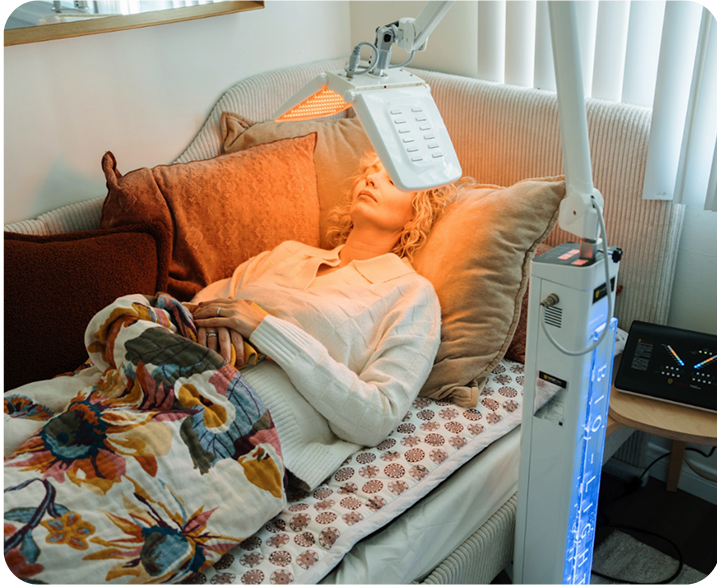
To start, red light therapy delivers photons in the 630 to 850 nanometer range that cells absorb through specific receptors in the mitochondria. This process, called photobiomodulation, stimulates Adenosine Triphosphate (ATP) production and reduces oxidative stress at the cellular level, without producing heat (Couturaud et al., 2023). It's a surface-level mechanism, and intentionally so. The goal is cellular energy stimulation in the upper tissue layers, not deep thermal penetration. As a result, red light penetrates around 1 to 2 centimeters, reaching superficial structures like the dermis.
How Far Infrared Goes Deeper
On the other hand, Far Infrared operates in an entirely different part of the electromagnetic spectrum, namely the 5.6 to 15 micron range. Here, wavelengths are absorbed by the body's water molecules, generating heat within the tissue rather than reflecting off the surface. That absorption method is what gives Far Infrared its depth advantage. How the BioMat® Heals breaks down the full cascade of potential healing properties Far Infrared has.
Near Infrared vs. Far Infrared: Clearing Up The Confusion
Many red light panels include near Infrared wavelengths (700 to 1,100 nanometers) alongside visible red light, which is worth addressing directly. Near Infrared and Far Infrared are not the same thing. Near Infrared penetrates roughly 2 to 3 centimeters, deeper than visible red light, but still in the superficial tissue range. Contrastingly, Far Infrared at 5.6 to 15 microns penetrates 6 to 8 centimeters, reaching joint capsules, deep muscle tissue, and connective tissue that near Infrared can’t access.

Far Infrared vs. Red Light Benefits: Where Each Excels
Both therapies have legitimate, well-studied applications. So, the Infrared mat vs. red light panel comparison focuses on what each one is best suited for.
Photobiomodulation And Cellular Light Absorption
Red light therapy has a solid evidence base for conditions where stimulating cellular energy in the upper tissue layers is the goal. There is a growing body of research that suggests it may be useful for skin rejuvenation, collagen synthesis, acne reduction, and surface wound healing (Hernández-Bule et al., 2024). For these aesthetic applications, red light's non-thermal, precise wavelength delivery might be preferable.
Thermal Therapy And Deep Tissue Recovery
Far Infrared suits a different set of applications, where heat is the point. Deep tissue warmth supports vasodilation, muscle relaxation, and circulation improvement in ways that photobiomodulation doesn't attempt to replicate. These are also the mechanisms behind the BioMat®'s FDA-cleared indications for temporary relief of minor pain, muscle relaxation, and local circulation improvement. Far Infrared Ray Therapy Clinical Results documents the peer-reviewed research behind these outcomes.
Heat Shock Proteins: A Mechanism Red Light Can't Activate
One of the more scientifically interesting distinctions between the two therapies is the heat shock protein response, a cellular repair mechanism that thermal Infrared activates and red light photobiomodulation doesn't. When tissue temperature rises during Far Infrared exposure, the body activates heat shock proteins: specialized molecules involved in cellular protection and repair (Hu et al., 2022).
Research associates these proteins with cellular stress management, and their activation is one of the proposed mechanisms behind the cumulative recovery benefits that consistent Far Infrared users report over time (Hu et al., 2022). Because red light produces no heat, it doesn't trigger this pathway. The Shocking Truth About Cellular Health covers how heat shock protein activation through thermotherapy works in more detail.
Crystal Amplification And Negative Ions: Exclusive To The BioMat®
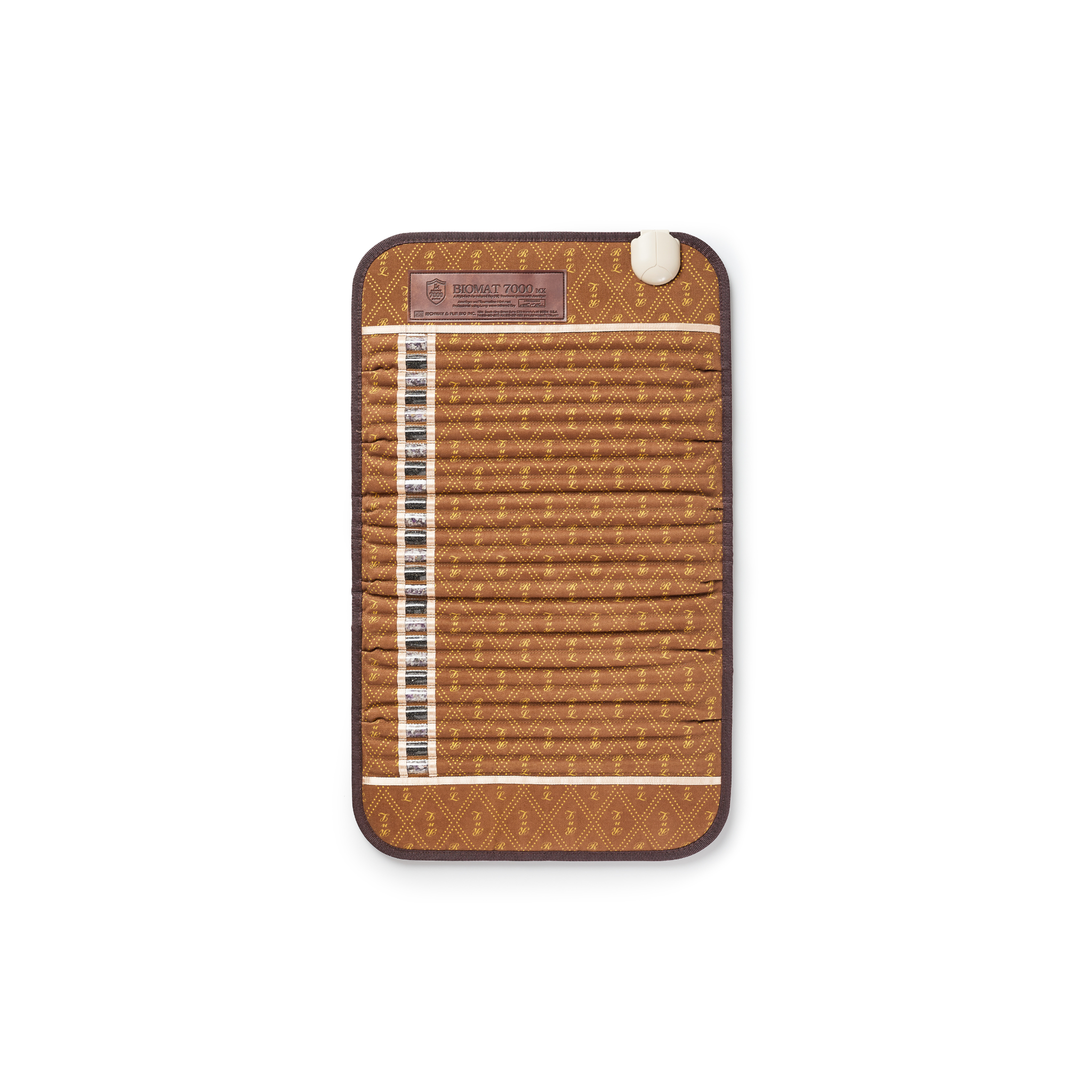
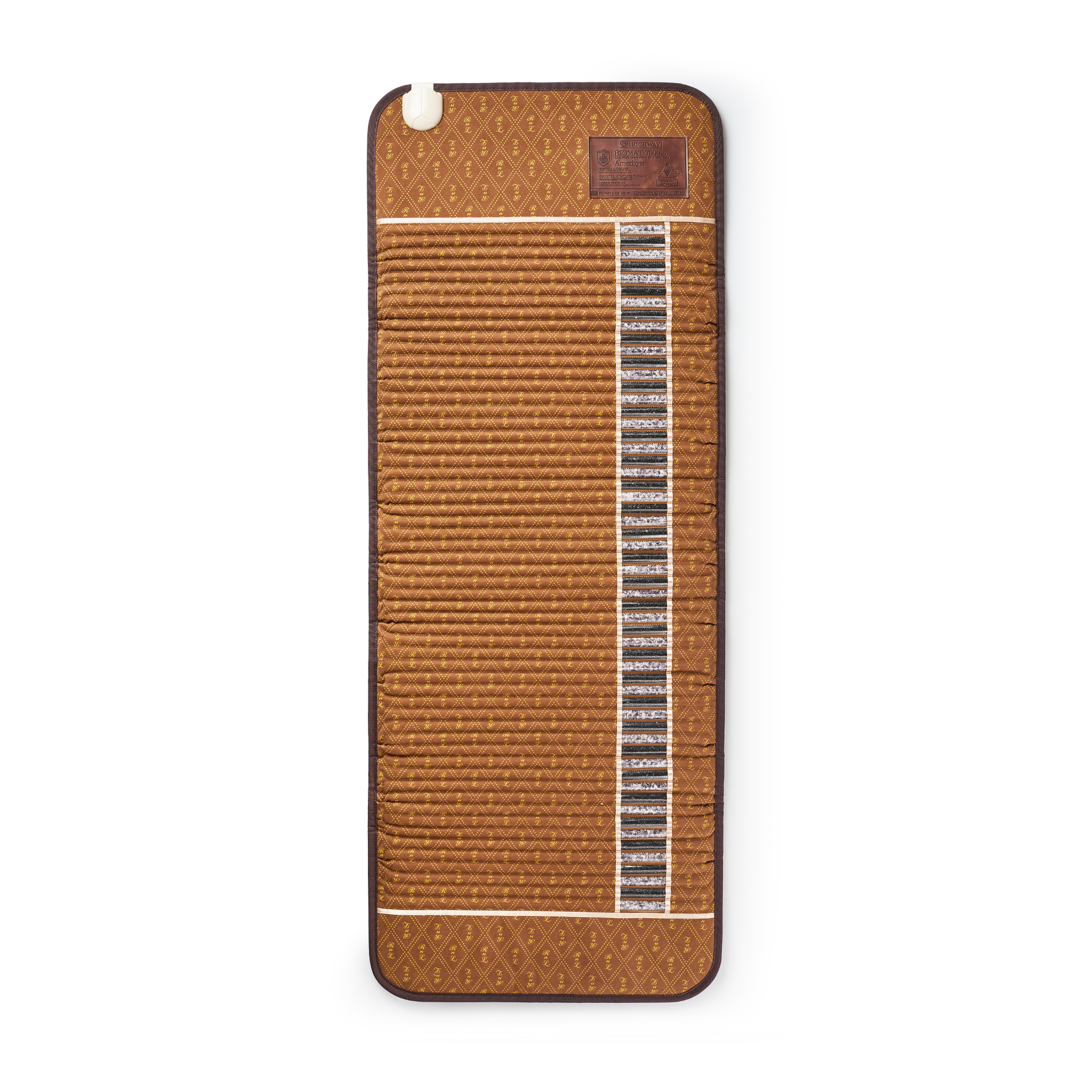
Beyond depth, the BioMat® adds two therapeutic mechanisms that no red light device at any wavelength or power level offers. These aren't add-on features. They're built into the crystal construction of the mat itself, and they address processes that light-based therapy simply doesn't reach.
Amethyst Amplification: Uniform Heat
Natural Amethyst has a hexagonal crystal structure that gives it thermal conductivity properties standard heating elements don't share. When used as a conductive layer, it absorbs and re-emits Far Infrared rays more evenly across the entire mat surface, resulting in constant therapeutic exposure regardless of body position or session length. This even distribution is also part of what allows the BioMat® to deliver deep tissue warmth at lower surface temperatures, making longer sessions more comfortable. Why Choose BioMat Over Other Mats covers how the crystal construction distinguishes the BioMat® from other Infrared devices in more detail.
Negative Ion Generation Absent From Red Light
There's a reason people feel instinctively better near waterfalls, in forests, or after a thunderstorm: these are environments naturally rich in Negative Ions. When the BioMat®'s black Tourmaline crystals heat up, they generate Negative Ions continuously throughout the session. That’s something no red light panel does, regardless of configuration.
Research suggests exposure to Negative Ions may support mood, help lower stress markers, and play a role in neutralizing free radicals associated with oxidative stress (Jiang et al., 2018; Perez et al., 2013). The BioMat® produces approximately 3,236 Negative Ions per cubic centimeter per session, nearly double the output of comparable Infrared mats, through two patented crystal layers. For users dealing with everyday stress or inflammation alongside aches or pains, this adds another dimension that Far Infrared heat alone doesn't cover. Our BioMat Research page documents the peer-reviewed evidence behind both of these mechanisms.

Final Thoughts
Red light therapy and Far Infrared therapy are both research-backed modalities, but they're not interchangeable. Red light works at the surface, where skin health, collagen, and superficial tissue conditions respond well to photobiomodulation. Far Infrared works deeper, where pain, inflammation, and stress originate.
For anyone managing conditions that live more than a few centimeters below the skin, depth is the deciding factor, and Far Infrared is the therapy that reaches it. Meanwhile, for people dealing with both surface and deep tissue concerns, the two therapies address non-overlapping layers, making them complementary rather than competing.
Frequently Asked Questions About Red Light vs. Infrared
Does BioMat® emit red light wavelengths during sessions?
The BioMat® generates Far Infrared rays, Negative Ions, and crystal-conducted thermal energy. It does not produce visible red light or near Infrared photons.
Is near Infrared in red light panels the same as Far Infrared in the BioMat®?
No. Near Infrared penetrates roughly 2 to 3 centimeters, while Far Infrared penetrates 6 to 8 centimeters through a different absorption mechanism entirely.
Can red light therapy reduce cortisol the way BioMat® clinical studies show?
No equivalent cortisol reduction study exists for red light therapy. BioMat® demonstrated a 78% reduction in cortisol in an independent 12-week study that measured pre- and post-biofeedback brain scans, as well as fasting blood tests.
Does red light therapy hold FDA certification equivalent to the BioMat®?
Most red light devices are sold as general wellness products. The BioMat® holds FDA 510(k) Class II Medical Device certification specifically for arthritis and pain relief.
Can red light therapy and Far Infrared be used together?
Yes. Because they address different tissue depths and biological mechanisms, combining them may be useful for users managing both surface and deep tissue conditions simultaneously.
Which therapy suits users who can’t tolerate heat?
Red light therapy produces no heat, making it a good fit for heat-intolerant users. That said, the BioMat® Mini's green setting at 95°F provides a full-body cooling effect while relaxing your body with Negative Ions. As a result, you feel relaxed all throughout the day without drowsiness.
Sources:
- Couturaud, V., Le Fur, M., Pelletier, M., & Granotier, F. (2023). Reverse skin aging signs by red light photobiomodulation. Skin research and technology : official journal of International Society for Bioengineering and the Skin (ISBS) [and] International Society for Digital Imaging of Skin (ISDIS) [and] International Society for Skin Imaging (ISSI), 29(7), e13391. https://doi.org/10.1111/srt.13391
- Hernández-Bule, M. L., Naharro-Rodríguez, J., Bacci, S., & Fernández-Guarino, M. (2024). Unlocking the Power of Light on the Skin: A Comprehensive Review on Photobiomodulation. International journal of molecular sciences, 25(8), 4483. https://doi.org/10.3390/ijms25084483
- Jiang, S. Y., Ma, A., & Ramachandran, S. (2018). Negative Air Ions and Their Effects on Human Health and Air Quality Improvement. International journal of molecular sciences, 19(10), 2966. https://doi.org/10.3390/ijms19102966
- Perez, V., Alexander, D. D., & Bailey, W. H. (2013). Air ions and mood outcomes: A review and meta-analysis. BMC Psychiatry, 13, 29. https://doi.org/10.1186/1471-244X-13-29
These statements have not been evaluated by the Food and Drug Administration. These products are not intended to diagnose, treat, cure, or prevent any disease. Specific medical advice should be obtained from a licensed health care practitioner.
Learn more about our editorial standards and medical review process.