


Key Takeaways:
- FDA Status: The BioMat® holds FDA 510(k) Class II Medical Device registration with therapeutic indications for pain and arthritis, while Sparkle Mats do not.
- Focused Engineering: BioMat® spent 25 years perfecting Far Infrared depth, Negative Ion output, and crystal construction rather than combining multiple modalities at diluted intensity. The depth of each mechanism matters more than the number of mechanisms.
- Negative Ion Output: BioMat® generates 3,236 Negative Ions per cubic centimeter, which is double that of Sparkle Mats.
Both the BioMat® and Sparkle Mats use Amethyst and Tourmaline crystals to deliver Far Infrared heat and Negative Ions. On the surface, they look like they're solving the same problem. The differences that matter most, though, aren't visible from a product photo. They show up in regulatory status, therapeutic depth, Negative Ion output, and what kind of support exists after purchase.
The BioMat® has been at the center of Far Infrared crystal therapy for over 25 years as an FDA 510(k) Class II registered Medical Device, trusted by more than 500,000 users and health professionals worldwide.
This blog compares the BioMat® vs. Sparkle Mats using publicly available specifications so you can make an informed decision about which one fits your needs.
BioMat® vs. Sparkle Mats: Technology Overview
At first glance, BioMat® and Sparkle Mats look similar. Both use Amethyst and Tourmaline crystals to deliver Far Infrared heat and Negative Ions. However, what each company builds on top of that differs significantly in approach and focus.
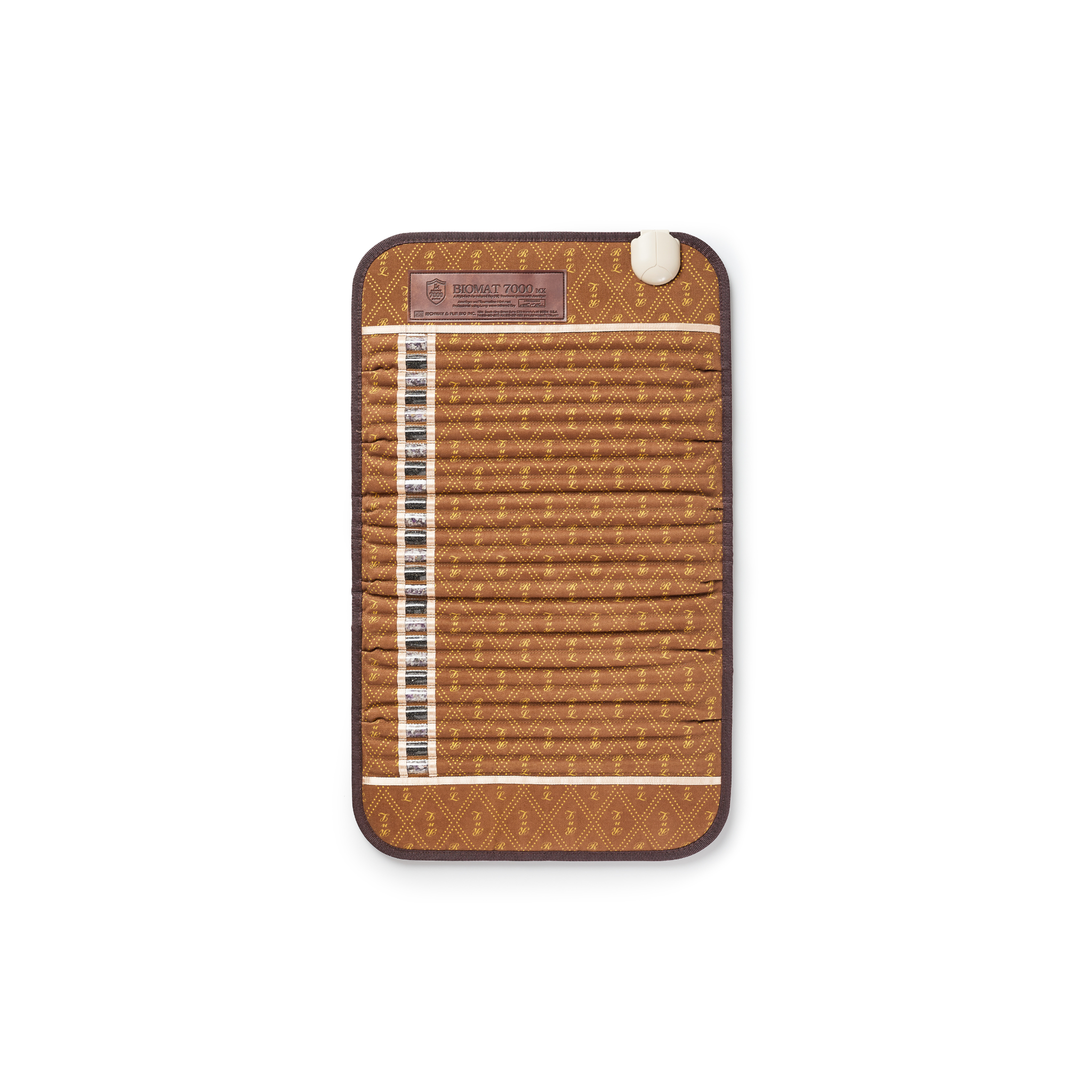
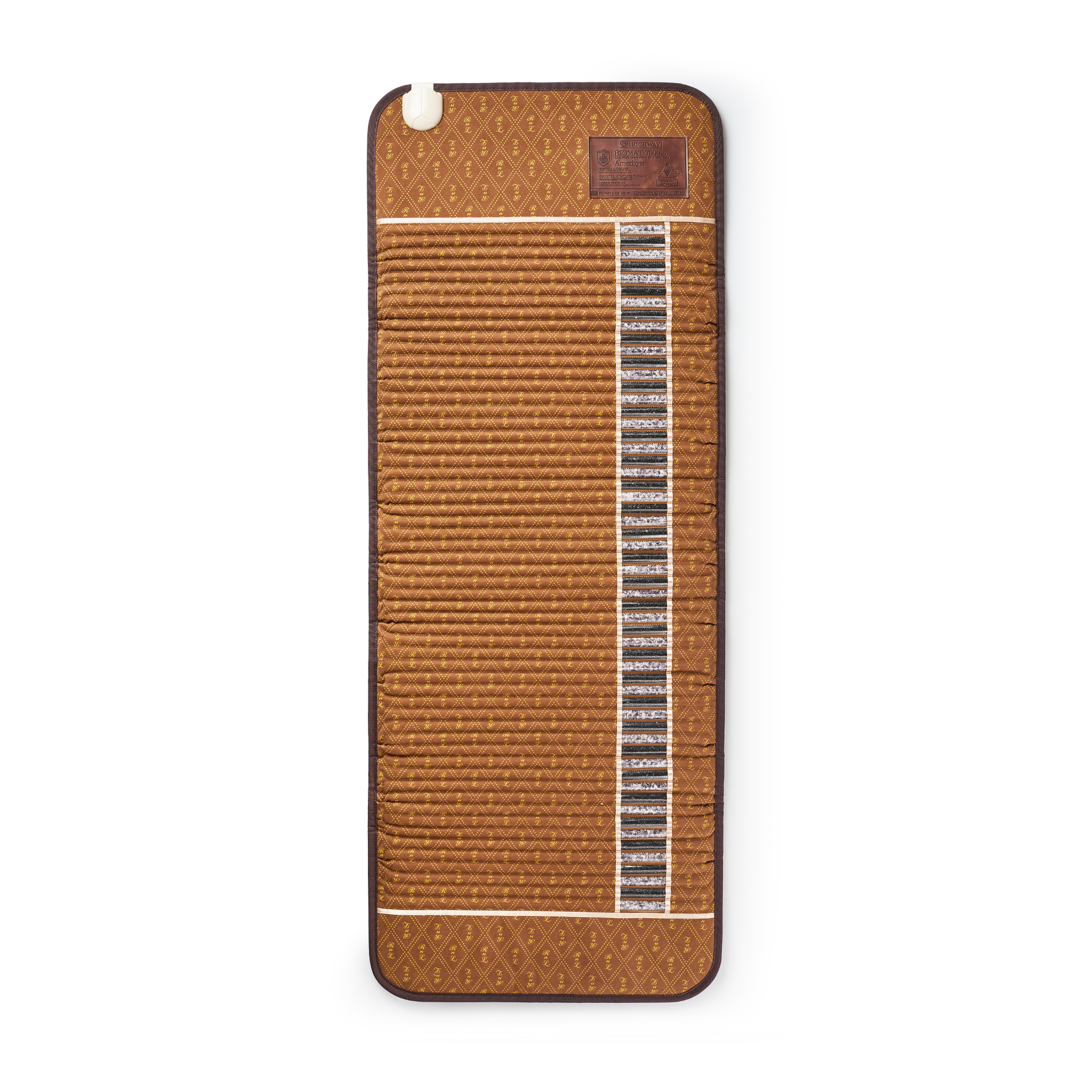
The BioMat® Amethyst Therapy Mat
The BioMat® combines three core technologies: Far Infrared heat conducted through natural Amethyst crystal channels, Negative Ions generated by heated black Tourmaline, and electromagnetic field (EMF)-blocking layers integrated into a 17-layer construction. The Amethyst distributes Far Infrared evenly across the mat surface and supports penetration depths of 6 to 8 centimeters. Meanwhile, the black Tourmaline generates approximately 3,236 Negative Ions per cubic centimeter continuously throughout every session. The design reflects a deliberate focus, namely refining three mechanisms to clinical depth over 25 years rather than combining multiple modalities at lower intensity. Why BioMat covers what goes into each layer and why the material choices matter.
The Sparkle Mat Stack
Sparkle Mats takes a broader approach, combining Far Infrared heat, Pulsed Electromagnetic Field (PEMF) technology, red light therapy, Negative Ions, and hot gemstone therapy across 21 layers. For users who want multiple therapeutic modalities in one product, that range is appealing. The trade-off is that each technology operates alongside others within a single mat construction. For instance, PEMF requires dedicated coil systems, red light requires sustained LED contact, and integrating both into a heated mat means each mechanism operates at a different intensity than it would in a dedicated device. Sparkle Mats was founded in 2019, so the long-term development track record behind its five modalities is still building.

Amethyst Mat Comparison: FDA Status And Accountability
This is the most significant distinction in the comparison, and it's worth knowing what FDA status means before treating it as a checkbox.
BioMat® FDA 510(k) Class II Registration
The BioMat® holds FDA 510(k) Class II Medical Device registration, a designation that requires submitting clinical evidence reviewed by FDA officers before therapeutic claims can be made. This authorizes specific indications, including temporary relief of arthritis pain, joint pain and stiffness, muscle spasms, and minor sprains. Maintaining that registration requires an ongoing annual investment in compliance testing and quality control. For additional reading, How the BioMat Works: Infrared, Amethyst and Ions covers the full science behind BioMat®'s FDA-registered mechanisms.
Sparkle Mats And FDA Status
The Sparkle Mats website states that their mats are produced in an FDA-approved facility, meaning the facility meets FDA production standards. That’s a useful quality indicator, but still not quite the same as device-level registration. After all, device registration means the product itself has been reviewed and cleared for specific therapeutic uses. For buyers choosing a mat specifically for pain relief or arthritis support, that distinction is worth knowing before making a purchase.
Amethyst Therapy Mat: Crystal Quality And Therapeutic Depth
Both brands use Amethyst and Tourmaline. The quality, consistency, and output of those crystals are where the Infrared mat comparison becomes measurably different.
Crystal Composition And Negative Ion Output
The BioMat® generates approximately 3,236 Negative Ions per cubic centimeter through its patented black Tourmaline layers. In contrast, Sparkle Mats generate approximately 1,500 Negative Ions per cubic centimeter from 96 Tourmaline discs. For users whose primary interest is Negative Ion therapy for stress or mood support, the difference in output is meaningful (Jiang et al., 2018).
Far Infrared Penetration Depth
BioMat® Far Infrared penetrates 6 to 8 centimeters, reaching joint capsules, synovial membranes, and deep connective tissue where pain originates. On the other hand, Sparkle Mats lists approximately 1.5 inches of FIR penetration. For conditions like arthritis and deep joint inflammation, whether Far Infrared reaches the affected tissue determines if it can support relief, which is also the reason BioMat®'s deeper penetration is tied to its FDA-cleared pain indications. The BioMat® Professional provides this soothing warmth and full-body coverage for comprehensive sessions.

Infrared Mat Comparison: Warranty And Long-Term Ownership
To start, Sparkle Mats offers a 5-year limited warranty and a 108-day risk-free trial. Those are both generous terms for a brand founded in 2019.
On the other hand, the BioMat®'s 3-year Limited Warranty is shorter on paper, but the full ownership support picture is broader. The CARE Program provides complete same-model replacement for qualifying issues, while our Trade-In Program applies 30% of the original purchase price toward any Richway product when upgrading. Richway also offers repair service for BioMat® units throughout their entire serviceable life, meaning most owners never face a full repurchase cost.
A Few More Things Worth Knowing
Beyond the core comparison points, these additional factors may help your decision.
- Price: As of writing, the BioMat® Mini is $850 and the Professional is $2,150. Meanwhile, the Sparkle Mat Full Size is normally $999, or $444 for the Mini. Both brands offer free shipping to the USA and Canada.
- EMF Certification: BioMat® EMF protection is independently certified by Intertek laboratory, whereas Sparkle Mats lists EMF shielding across multiple layers but does not publish equivalent independent third-party certification.
- Professional Discount: BioMat® offers a $100 discount for health professionals, veterans, first responders, and families supporting individuals with autism. Sparkle Mats does not publish an equivalent program.
- HSA And FSA Eligibility: BioMat®'s FDA Class II Medical Device status makes it eligible for many HSA and FSA plans. However, it’s still best to verify with your plan administrator before purchasing.
- Accessories: Both BioMat® models include a temperature controller, a Germanium Waterproof Cover, a carrying case, 100% cotton soft quilted cover, and a step-by-step user manual. The Mini vs. Pro Buyer's Guide covers each BioMat® model in more detail. Please double-check to see what's included with Sparkle Mats at each price point, but the Full version includes a carrying case, a controller, a user guide, and a PEMF visualizer.

Final Thoughts
Both mats use Amethyst and Tourmaline and deliver Far Infrared and Negative Ions, so the surface similarity is legitimate. From there, the differences that matter most for therapeutic outcomes are penetration depth, Negative Ion output, and regulatory standing. For users managing ongoing discomfort and looking for a device with clinically reviewed therapeutic indications, those distinctions carry significant weight. But for those of you who want a broader multi-modality platform at a lower entry price, the Sparkle Mat has appeal. Understanding what each is built to do is the starting point for choosing between them.
Frequently Asked Questions About The BioMat® vs. Sparkle Mats
Can BioMat® be used by health professionals with clients?
Yes. The BioMat®'s FDA 510(k) Class II registration makes it appropriate for licensed practitioners, including chiropractors, massage therapists, and integrative physicians.
Can BioMat® and Sparkle Mats be used by people with heat sensitivity?
The BioMat® Blue setting at 95°F delivers Negative Ions without significant added heat, and there's also a No Heat / Negative Ion only setting. Check Sparkle Mats' specifications for equivalent low-heat options.
Does the BioMat® come with accessories that Sparkle Mats don’t?
Both BioMat® models include a digital controller, a Germanium Waterproof Cover, a carrying case, a cotton quilted cover, and a user manual. Sparkle Mats often do not come with a waterproof or quilted cotton cover.
Does BioMat® offer financing options?
Yes. PayPal Pay in 4 offers interest-free installments on purchases under $1,500, and PayPal Credit offers extended financing.
Are there any similarities between BioMat and Sparkle Mats worth noting?
Both use Amethyst and Tourmaline, deliver Far Infrared and Negative Ion therapy, and offer free shipping in the USA and Canada. The surface similarities make the differences in FDA status and penetration depth more, not less, significant.
Is BioMat® worth the price premium over Sparkle Mats?
It depends on what matters most to you. If FDA device registration, deeper Far Infrared penetration, higher Negative Ion output, and long-term ownership support are priorities, the BioMat® is the stronger fit. If a broader multi-modality platform at a lower entry price is the goal, Sparkle Mats is worth considering.
Sources:
- Jiang, S. Y., Ma, A., & Ramachandran, S. (2018). Negative air ions and their effects on human health and air quality improvement. International Journal of Molecular Sciences, 19(10), 2966. https://doi.org/10.3390/ijms19102966
These statements have not been evaluated by the Food and Drug Administration. These products are not intended to diagnose, treat, cure, or prevent any disease. Specific medical advice should be obtained from a licensed health care practitioner.
Learn more about our editorial standards and medical review process.