


Key Takeaways:
- Direct contact provides deeper support: BioMat® delivers Infrared through direct contact with the crystals, penetrating tissue more deeply than ambient sauna heat can.
- Crystal Therapy delivers outcomes saunas cannot: Amethyst amplification and Negative Ion generation are absent from Infrared saunas yet present in the BioMat®.
- The BioMat offers an accessible alternative to saunas: BioMat® requires no installation, no dedicated room, and no warm-up period, enabling hassle-free use.
Both the BioMat® and Infrared saunas are built on the same foundational technology, namely Far Infrared heat, but they deliver it in fundamentally unique ways. Far Infrared is a frequency of light that sits just beyond the visible red spectrum, part of the same family as natural sunlight but without the UV radiation. What makes it therapeutically interesting is where it goes.
Unlike a heating pad that warms the skin's surface, Far Infrared wavelengths are absorbed by the body's water molecules, generating heat from within the tissue rather than conducting it inward from outside. That mechanism is what drew NASA to study it decades ago and what has since attracted growing clinical interest across pain management, circulation research, and recovery applications. So, where the BioMat® vs. infrared saunas discussion diverges is in how that mechanism is delivered, and what each system adds beyond warmth.
This post breaks down the key differences across tissue penetration, daily usability, recovery outcomes, and therapeutic capabilities, so anyone researching home Infrared therapy options has a clear picture of what each offers.
BioMat Sauna Comparison: Which Penetrates Deeper Into Tissue
The key distinction between an Infrared sauna vs. BioMat® comes down to delivery method – and that affects everything else.
Direct Contact vs. Ambient Air
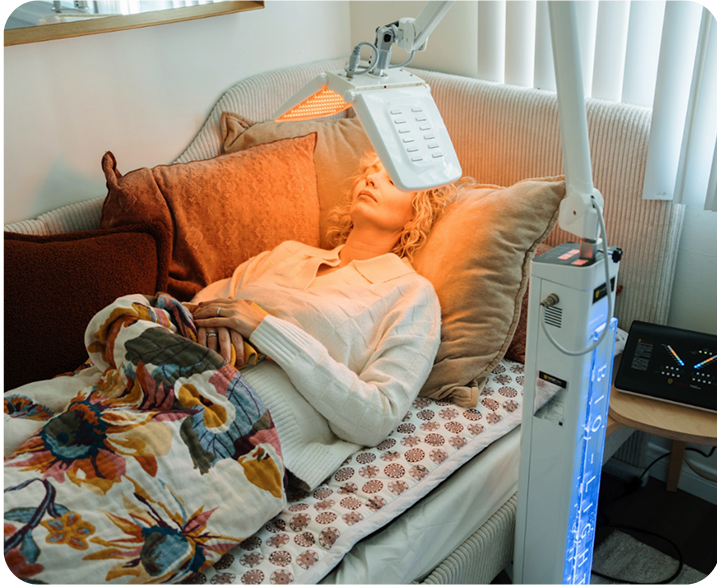
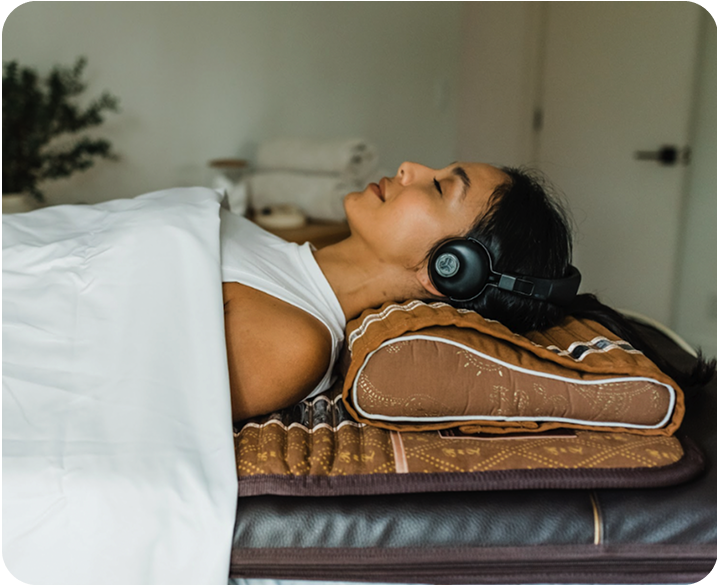
Infrared saunas heat the air inside an enclosed space. That said, your body absorbs Far Infrared indirectly as it radiates from heated panels, warming surface layers and making you sweat. In contrast, the BioMat® places the Infrared source in direct contact with the body. This way, Far Infrared wavelengths pass from the crystal surface directly into your tissue, eliminating the energy loss that occurs when Infrared radiation has to bridge the gap between a panel and your skin. If you want to know more about how the BioMat® works, this page explains the advanced technology in detail.
Crystal Amplification
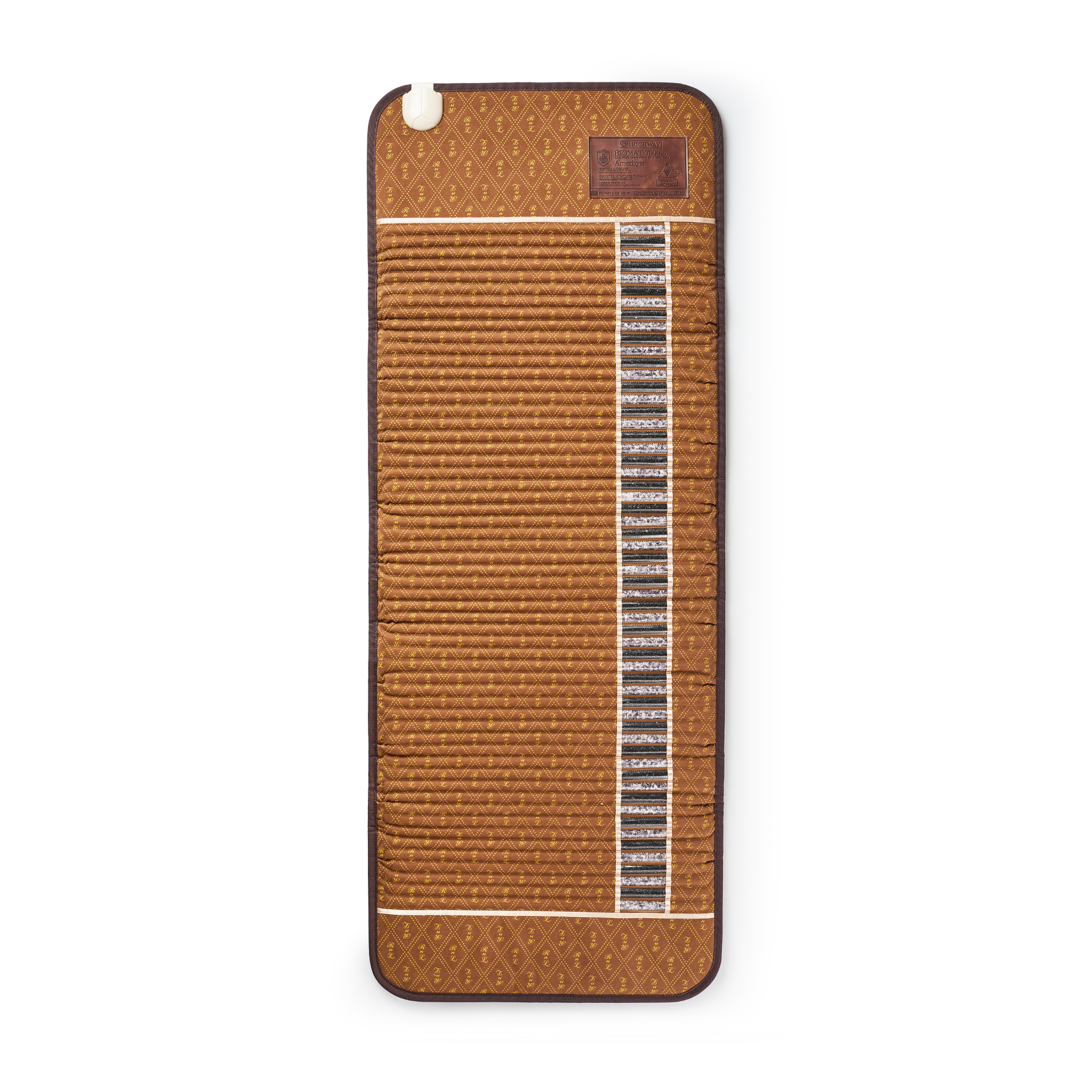
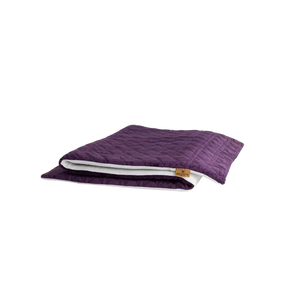
Standard Infrared saunas use carbon or ceramic panels to generate infrared in the therapeutic range. Meanwhile, the BioMat® places natural Amethyst crystals inside its 17-layer intelligent construct, using the crystal's thermal conductivity to distribute Far Infrared more evenly and at greater depth, reaching 6-8 centimeters below the skin. The result is deeper tissue penetration at lower surface temperatures, reaching the muscle fibers, joint capsules, and connective tissue where discomfort tends to concentrate.

Why Accessibility Determines Consistency
Far Infrared therapy produces cumulative results through ongoing use. So, a device that fits seamlessly into your schedule tends to give you more opportunities to benefit from it rather than one that’s only reached for sometimes. For most people, those logistics come down to a few key factors:
- No Installation Required: BioMat® operates on standard household outlets without dedicated wiring, permits, or the hefty installation costs that infrared saunas typically carry.
- Lower Cost: For reference, the sauna itself might cost between $1,500 and $7,000 on average, and you’re looking at around $500 to $1,500 for professional labor. Meanwhile, a BioMat® Professional is $2,150 and doesn’t require any additional wiring or installation.
- No Dedicated Space Needed: A full-size mat stores flat under a bed or in a closet. Contrastingly, Infrared saunas require 4 to 16 square feet of permanent floor space, which most homes cannot spare.
- Ready In Minutes: BioMat® reaches therapeutic temperature in 10 to 15 minutes, whereas infrared saunas require 20 to 45 minutes of warm-up time before sessions can begin.
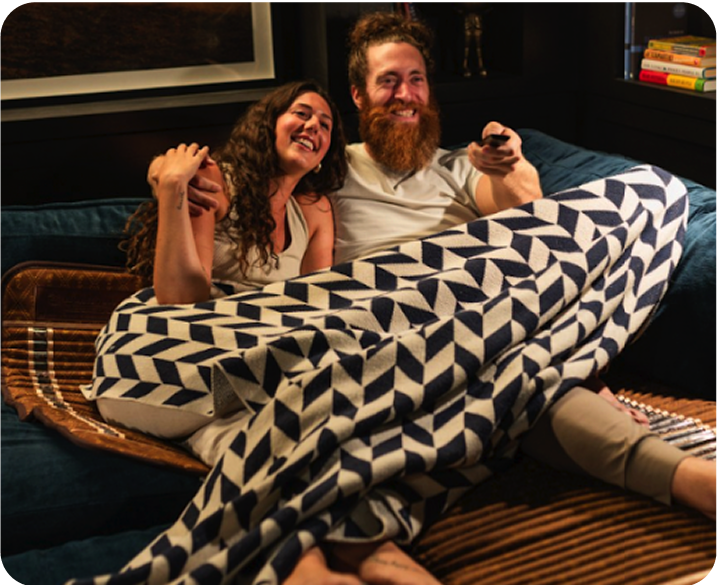
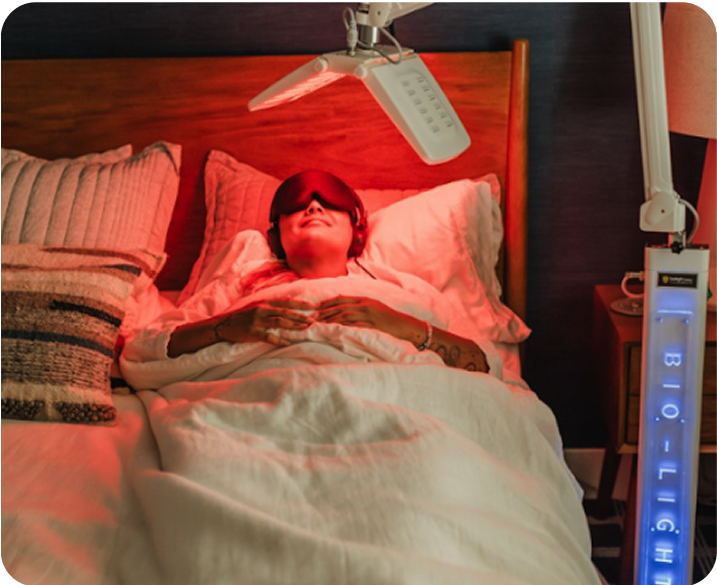
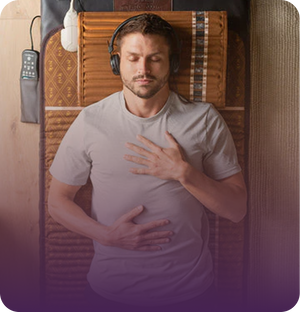
- Multitasking Capabilities: BioMat® sessions can be done while lying down, reading, sleeping, or watching television. Saunas require dedicated sitting in a heated enclosure for the full duration of the session.
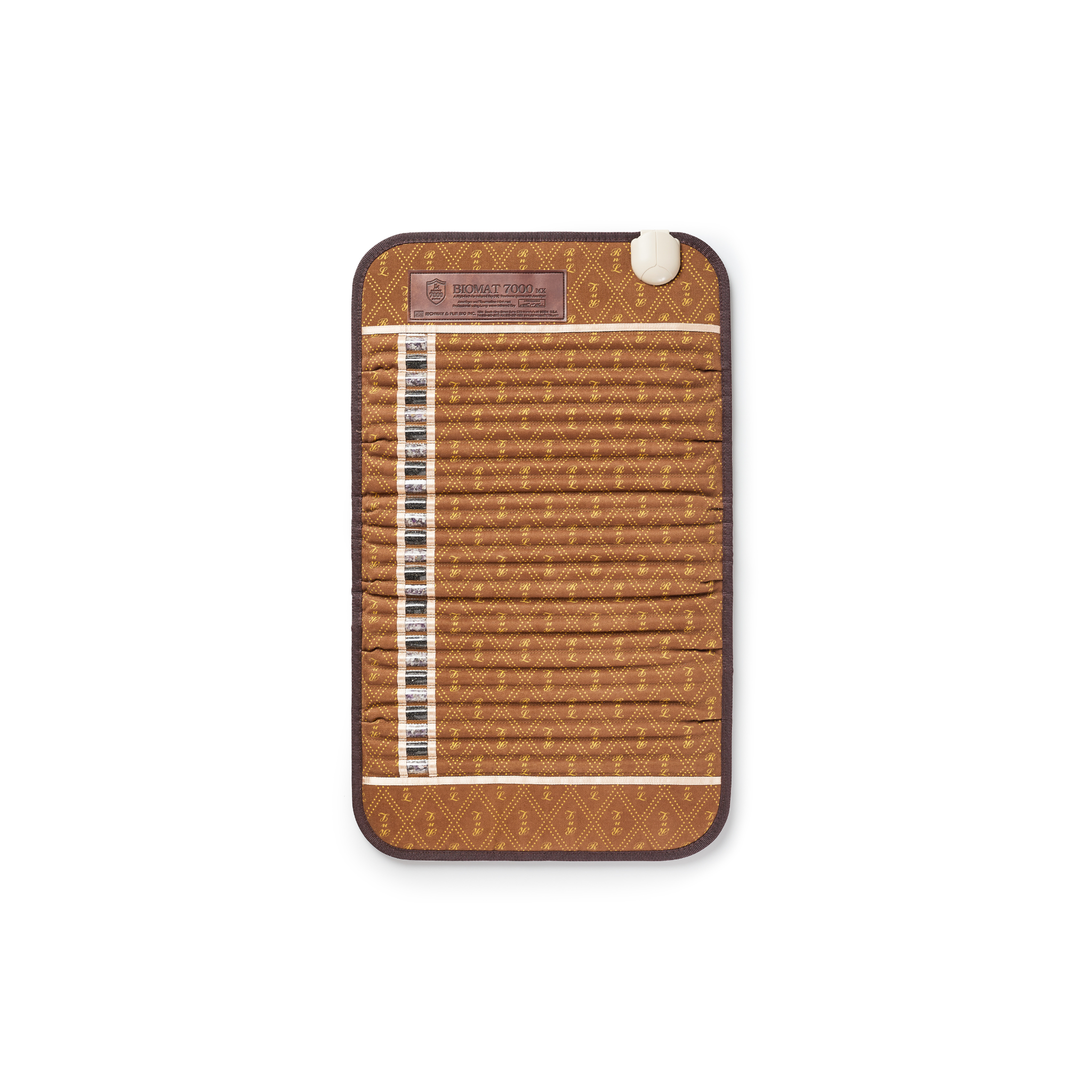
- Travel-Friendly: The compact and portable BioMat® Mini easily fits inside luggage. Plus, you can easily use it on your car seat, office chair, and more. On the other hand, Infrared saunas are inaccessible during trips, which might interrupt consistent therapy.
Home Infrared Therapy: Use Cases Compared
A BioMat® and sauna comparison across recovery outcomes shows where contact-based therapy separates from ambient heat and where the two overlap.
Circulation And Muscle Recovery
Both therapies support circulation through thermal stimulation. Essentially, heat causes blood vessels to dilate, improving blood flow and increasing oxygen delivery to muscle tissue. Research on Far Infrared sauna use has found some evidence suggesting FIR therapy may be associated with blood pressure normalization in certain populations, though the author notes that the evidence is limited and warrants careful interpretation (Beever, 2009). For the BioMat®, this circulatory effect is offered through direct crystal contact, supporting vasodilation in the treated tissue zone and helping clear metabolic waste from areas under physical stress. In fact, that’s one of the BioMat®'s FDA-cleared indications.
Cellular Effects
Both therapies activate bodily responses through heat, but they do so through distinct mechanisms. Saunas work through elevated ambient temperature and core warming. The BioMat® provides Far Infrared at lower surface temperatures with deeper tissue reach, impacting muscle fibers and joint structures where thermal stimulation activates heat shock proteins. These are specialized molecules involved in cellular protection and repair (Hu et al., 2022).
Overall, the combination of improved circulation, muscle relaxation, and heat shock protein activation in the BioMat® creates favorable conditions that may support physical recovery after exercise or physical stress. For users managing fatigue or inflammatory conditions, that depth distinction matters. Beyond Weight Loss: Far Infrared on Metabolism covers these broader cellular effects in more detail.

Far Infrared Sauna Alternative Benefits: Negative Ions And EMF
This is where the Far Infrared sauna alternative case for the BioMat® becomes most clear. Infrared saunas heat air and emit infrared radiation, but they don’t generate Negative Ions. That gap matters more than it might initially seem.
Negative Ion Generation Through Crystal Heating
When the BioMat®'s Tourmaline crystals heat to therapeutic temperatures, they produce Negative Ions continuously throughout the session. Negative Ions are molecules with an extra electron that makes them biologically active, and they're found abundantly in nature, near waterfalls, forests, and after thunderstorms (Jiang et al., 2018). Research has looked into their potential role in neutralizing free radicals associated with oxidative stress, supporting mood, and reducing stress markers, with several studies pointing to improved focus and better recovery from mental fatigue in ion-enriched environments (Perez et al., 2013; Nakane et al., 2002).
The findings are still developing, but the direction across the literature is consistent, and it represents a helpful layer that no sauna configuration can replicate. How the BioMat® Heals explains how Negative Ion generation works alongside Far Infrared to produce outcomes that heat alone cannot deliver, and 5 Benefits of the Holistic Approach to Managing Chronic Pain covers why this kind of multi-mechanism support matters for people managing ongoing conditions.
EMF Exposure Differences
Infrared sauna enclosures contain electrical heating panels operating in close proximity to users throughout sessions, typically without dedicated EMF-blocking built into the structure. The BioMat® addresses this through EMF-blocking layers integrated into the mat's 17-layer construction. For anyone using a therapeutic device daily, that structural difference is worth factoring in. Far Infrared Ray Technologies Stimulate Weight Loss covers additional dimensions of how the BioMat®'s technology supports broader wellness outcomes beyond what ambient heat produces.

Final Thoughts
Both therapies use Far Infrared, and both have a place in a wellness routine. The meaningful differences are in how that Infrared is delivered, what each system adds beyond heat alone, and how realistically each fits into daily life. The BioMat®, an FDA 510(k) Class II Medical Device, delivers Far Infrared through direct crystal contact, generates Negative Ions, and requires no permanent installation or dedicated space. For anyone building a convenient Far Infrared practice at home, those distinctions add up over time.
Frequently Asked Questions About Biomat Vs. Infrared Sauna
Is the BioMat® more cost-effective than owning an infrared sauna over time?
When factoring in installation, maintenance, and dedicated room costs, the BioMat® is significantly more economical over a multi-year period.
Can the BioMat® be used on a bed or couch?
Yes. The BioMat® works on any flat surface, including beds, couches, and massage tables, without requiring a dedicated space. Once you’re done, you can roll it up and store it.
Does combining the BioMat® with sauna use provide additional benefit?
Yes. The BioMat® adds Negative Ion generation, Amethyst crystal amplification, and direct-contact depth that sauna sessions can’t provide on their own.
Is the BioMat® suitable for users who find saunas uncomfortable or claustrophobic?
Yes. BioMat® sessions take place in an open space, making them accessible to users who find enclosed heated environments difficult to tolerate.
Is the BioMat® suitable for elderly users who cannot safely use high-heat saunas?
Yes. Temperature settings starting at 95°F allow many elderly and heat-sensitive users to access Far Infrared therapy safely and comfortably.
Does the BioMat® require the same hydration protocols as sauna sessions?
Ideally, yes. Hydrating before and after sessions is recommended, as thermal therapy often increases the body's fluid demand regardless of sweat volume.
Sources:
- Beever, R. (2009). Far-infrared saunas for treatment of cardiovascular risk factors: Summary of published evidence. Canadian Family Physician, 55(7), 691–696.
- Hu, C., Yang, J., Qi, Z., Wu, H., Wang, B., Zou, F., Mei, H., Liu, J., Wang, W., & Liu, Q. (2022). Heat shock proteins: Biological functions, pathological roles, and therapeutic opportunities. MedComm, 3(3), e161. https://doi.org/10.1002/mco2.161
- Jiang, S. Y., Ma, A., & Ramachandran, S. (2018). Negative air ions and their effects on human health and air quality improvement. International Journal of Molecular Sciences, 19(10), 2966. https://doi.org/10.3390/ijms19102966
- Perez, V., Alexander, D. D., & Bailey, W. H. (2013). Air ions and mood outcomes: A review and meta-analysis. BMC Psychiatry, 13, 29. https://doi.org/10.1186/1471-244X-13-29
- Nakane, H., Asami, O., Yamada, Y., & Ohira, H. (2002). Effect of negative air ions on computer operation, anxiety and salivary chromogranin A-like immunoreactivity. International Journal of Psychophysiology, 46(1), 85–89. https://doi.org/10.1016/s0167-8760(02)00067-3
These statements have not been evaluated by the Food and Drug Administration. These products are not intended to diagnose, treat, cure, or prevent any disease. Specific medical advice should be obtained from a licensed health care practitioner.
Learn more about our editorial standards and medical review process.